





Hajj Preparation for Women: Complete Guide to Mahram, Ihram & Packing
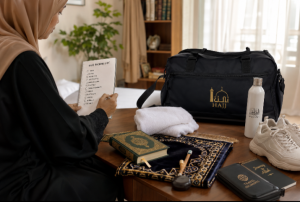
Hajj preparation for women starts with spiritual readiness, physical fitness, and correct paperwork. Next, learn the Mahram rules, pack Ihram-friendly essentials, and plan for your period with a doctor and a scholar. Following these steps keeps your Hajj safe, calm, and fully valid.
Reviewed for accuracy against authentic sources.
A woman’s first Hajj brings joy, nerves, and many questions. Careful hajj preparation for women answers most of them early. Where do you start, and which rules apply to you? And what happens if your period arrives in Makkah?
This guide answers each question step by step. Besides the checklist, you will see the Hadith evidence and the points where scholars differ. Therefore, you can plan with confidence and ask the right questions of your scholar and your doctor.
Hajj Preparation for Women: Quick Checklist
Scan this table first. Then read the sections below for the details.
| When | What to Do |
|---|---|
| 6 months before | Choose a licensed operator, and check that your passport stays valid for six more months. |
| 3 months before | Start daily walks, book a medical checkup, and take the required vaccines. |
| 1 month before | Study the rites, memorize the Talbiyah, and discuss your period plan with a doctor. |
| Final week | Pack fragrance-free items, copy your documents, and save emergency numbers. |
Spiritual and Mental Readiness for Hajj
Hajj preparation for women begins in the heart long before you board the plane. Beyond the physical effort, it asks for sincerity, patience, and knowledge.
Purify Your Intention (Niyyah)
Hajj is worship for Allah (SWT) alone. Therefore, renew your intention often, and avoid travelling for status, titles, or photos. The Prophet (PBUH) taught that deeds are judged by intentions (Sahih al-Bukhari: 1).
Build Patience (Sabr)
Expect huge crowds, hot weather, and long queues. So, train your mind to stay calm through every delay. The Qur’an also reminds pilgrims to avoid obscene speech, sin, and arguing during Hajj (Qur’an 2:197).
Learn the Rituals Before You Travel
First, study the pillars and the obligatory acts through authentic books or trusted lectures. Most scholars count Ihram, standing at Arafat, Tawaf al-Ifadah, and Sa’i among the central rites. Our first-time Hajj guide walks through each day in order.
Reading the history of Hajj also helps you feel the meaning behind every rite. As a result, the rituals feel like worship instead of a checklist.
Memorize the Talbiyah
The Talbiyah is the call of every pilgrim. Recite it after you make the intention for Hajj in Ihram. Keep repeating it until you start stoning Jamrat al-Aqabah on 10 Dhul Hijjah (Sahih al-Bukhari: 1549).
لَبَّيْكَ اللَّهُمَّ لَبَّيْكَ، لَبَّيْكَ لَا شَرِيكَ لَكَ لَبَّيْكَ، إِنَّ الْحَمْدَ وَالنِّعْمَةَ لَكَ وَالْمُلْكَ، لَا شَرِيكَ لَكَ
Labbayk Allahumma labbayk. La sharika laka labbayk. Innal-hamda wan-ni’mata laka wal-mulk. La sharika lak.
“Here I am, O Allah, here I am. You have no partner, here I am. Indeed, all praise, favor, and sovereignty belong to You. You have no partner.”
Most scholars advise women to recite the Talbiyah in a low voice. In contrast, men raise theirs.
Physical Fitness and Health Planning
Hajj demands real stamina, so physical hajj preparation for women matters. Pilgrims often walk many kilometers a day between Mina, Arafat, Muzdalifah, and the Haram. In fact, the distance can pass ten kilometers on peak days.
Build a Daily Walking Routine
- Start walking 45 to 60 minutes a day, two to three months before your trip.
- Wear comfortable, broken-in sneakers or cushioned sandals to prevent blisters.
- Add gentle stretching, so your legs recover faster after long days.
Book a Medical Checkup
Visit your physician to review conditions such as diabetes, hypertension, or asthma. Then keep an organized folder with all prescriptions. Also carry essential medicines in your hand luggage, together with a doctor’s letter.
Take the Required Vaccinations
Saudi authorities require the meningococcal (ACWY) vaccine for pilgrims. Depending on your country, they may also require or recommend other vaccines, such as seasonal flu and polio. Since these rules change every year, confirm the current list with your national Hajj authority.
Managing Your Period During Hajj
Many women worry about this topic more than anything else in their hajj preparation for women. Islam, however, gives clear and merciful rules.
Delaying Your Period
Some women choose to delay their period with medication. Many contemporary scholars permit this when it is medically safe. Therefore, consult a gynecologist months in advance, and test the medicine before you travel.
If Your Period Starts During Hajj
For example, Aisha (RA) began her period during Hajj and wept. The Prophet (PBUH) told her to do what pilgrims do. However, she must wait for purity before Tawaf (Sahih al-Bukhari: 294; Sahih Muslim: 1211).
| Ritual | While Menstruating |
|---|---|
| Standing at Arafat and Muzdalifah | Allowed |
| Stoning the Jamarat | Allowed |
| Dua, Dhikr, and the Talbiyah | Allowed |
| Tawaf around the Kaaba | Not allowed until pure |
| Sa’i between Safa and Marwa | Follows a valid Tawaf, so most women wait |
| Farewell Tawaf | Waived |
Once the bleeding stops, take Ghusl and complete your Tawaf. The Farewell Tawaf is waived for a woman in this state (Sahih al-Bukhari: 328).
Scholars also allow a woman whose period begins before Umrah to join Umrah and Hajj in one Ihram. Aisha (RA) did exactly this. Ask your group scholar before you decide.
Documents Checklist for Hajj
Paperwork is a major part of hajj preparation for women. A single missing document can disrupt your whole trip.
| Document | Key Requirement |
|---|---|
| International passport | Valid for at least six months from your travel date. |
| National ID or residency | Clear copies that match your passport details. |
| Vaccination certificate | Proof of the vaccines your country requires. |
| Passport photos | Recent photos with a plain white background. |
| Hajj permit and booking | Your confirmed registration through the official channels. |
| Mahram or group papers | Proof of relationship or your group’s official letter. |
- Authorized agencies: Register only through government-approved, licensed Hajj operators.
- Copies: Keep digital and paper copies of every document in separate bags.
Mahram Rules for Female Pilgrims
Mahram questions shape every hajj preparation for women. Put simply, a Mahram is a husband or a male relative she can never marry. The Prophet (PBUH) said a woman must not travel except with a Mahram (Sahih al-Bukhari: 1862; Sahih Muslim: 1341). This Hadith is the base of the scholarly discussion on Hajj.
What the Schools of Thought Say
- Hanafi and Hanbali schools: Traditionally treat a Mahram as a condition for any long trip, including Hajj.
- Shafi’i and Maliki schools: Permit obligatory Hajj with a trustworthy group of women, if the road is safe.
Current Saudi Policy
Saudi authorities now allow women to perform Hajj and Umrah without a Mahram when they travel with an organized group. Conditions such as age, group rules, and licensed booking apply. Since details change each season, check the Ministry of Hajj and Umrah before you book.
Key advice: Saudi law may permit travel without a Mahram. Even so, consider your own school of thought, and consult a trusted scholar before you decide.
Ihram Clothing Rules for Women
Unlike men, women do not wear two unstitched cloths. Instead, they wear ordinary modest clothing. The full list of restrictions appears in our guide on Ihram in Islam.
- Color: No color is required. Any modest, simple outfit in neutral tones is fine.
- Fabric: Choose loose, lightweight cotton to stay comfortable in the heat.
- Face and hands: A woman in Ihram does not wear a face veil (niqab) or gloves (Sahih al-Bukhari: 1838).
- Veil near men: Scholars allow a cloth hanging from the head, away from the face (Sunan Abi Dawud: 1833).
- Socks and shoes: Women may wear socks and closed shoes in Ihram.
- Fragrance: Perfume and scented products are forbidden once you enter Ihram.
Packing Checklist for Hajj
Smart hajj preparation for women keeps luggage light and practical. Focus on essentials, because heavy bags slow you down in crowds.
| Category | Essential Items |
|---|---|
| Clothing | Four or five loose cotton outfits, light abayas, hijabs, and undergarments. |
| Footwear | One pair of supportive walking shoes and one pair of flip-flops. |
| Toiletries | Fragrance-free soap, shampoo, petroleum jelly, and tissues. |
| Health and first aid | Personal medicines, ORS packets, painkillers, and sanitary pads. |
| Daily carry | Compact backpack, travel neck pillow, dua book, and sunglasses. |
Important Caution
Scented products are forbidden while you are in Ihram. Therefore, buy fragrance-free soap, lotion, and deodorant before you leave home. Also remove nail polish before Ihram, because it blocks water and makes wudu invalid.
Safety and Navigation Tips in Makkah and Madinah
Good hajj preparation for women also includes safety. A few habits keep you protected in the crowds.
- Stay with your group: Avoid walking alone through heavy crowds in Masjid al-Haram and Masjid an-Nabawi.
- Carry hotel details: Wear a wristband or card with your hotel name, room number, and group leader’s phone number.
- Visit the Rawdah on schedule: Women’s access to the Rawdah Mubarak runs in set time slots. Ask your group to book an appointment through the official Nusuk app.
- Drink water often: Heat exhaustion can strike quickly, so carry a small bottle at all times.
How to Choose a Reliable Hajj Operator
Your operator shapes almost every day of your trip. Therefore, choose with care, and never rely on social media offers alone.
- License: Confirm the operator on your national Hajj authority’s official list.
- Written package: Ask for hotel names, distances from the Haram, and Mina tent details in writing.
- Women’s arrangements: Ask whether female guides, women’s groups, and separate rooms are available.
- Refund terms: Read the cancellation policy before you pay any deposit.
Also talk to sisters who traveled with the same operator. Their honest reviews often reveal more than any brochure.
Emotional Care and Group Life
Hajj is joyful, yet it can also be tiring. Sharing a tent with strangers tests patience for many women. Also, long queues and little sleep can shorten tempers.
Prepare for this in advance. For example, agree on small group rules early, such as quiet hours and shared cleaning duties. In addition, keep a short dua card in your bag, and turn to Dhikr when frustration rises.
Remember that every hardship carries reward when you face it with patience. So, treat each delay as a chance to grow closer to Allah (SWT).
Common Mistakes Women Make Before Hajj
Most problems in hajj preparation for women come from late planning, not missing knowledge. Avoid these common errors.
- Leaving the period plan late: Medicine needs time to be tested, so see a doctor early.
- Wearing new shoes: Unbroken shoes cause blisters within hours.
- Packing scented items: One perfumed lotion can break an Ihram rule.
- Overpacking: Heavy bags are also hard to move through crowds.
- Booking with unlicensed agents: Always verify the operator with your Hajj authority.
Frequently Asked Questions (FAQ)
What Should a Woman Do If Her Period Starts During Hajj?
Answer: She continues every rite except Tawaf and formal prayers. After the bleeding stops and she takes Ghusl, she completes her Tawaf. In fact, dua, Dhikr, Arafat, and stoning all remain open to her.
How Do Women Trim Their Hair to Exit Ihram?
Answer: First, a woman gathers her hair. Then she trims about a fingertip’s length from the ends. Shaving the head is not allowed for women.
Can Women Wear Face Masks During Ihram?
Answer: A mask that touches the face should be avoided unless health requires it. In case of need, scholars give simple remedies, and some require a Fidya. Ask your group scholar for the ruling you should follow.
Can a Woman Perform Hajj Without a Mahram?
Answer: Scholars differ. Some schools require a Mahram, but others permit a safe group of trustworthy women. Saudi rules now allow organized group travel, so check the current conditions.
Can I Delay My Period With Pills for Hajj?
Answer: Many contemporary scholars permit it when it is medically safe. Also test the medicine under a gynecologist’s guidance before you travel.
Can Women Wear Nail Polish or Makeup in Ihram?
Answer: Remove nail polish, since it blocks water during wudu and Ghusl. Likewise, avoid any scented makeup or cream once you enter Ihram.
How Long Should I Prepare for Hajj?
Answer: Begin at least six months ahead. Early planning leaves time for vaccines, medical tests, and document fixes. In addition, it lowers stress in the final weeks.
Can I Bring My Own Prayer Mat and Qur’an?
Answer: Yes, but keep them small and light. A compact travel mat and a pocket Qur’an are enough. Therefore, leave heavy copies at home, and use a Qur’an app for extra reading.
Final Thoughts
Hajj preparation for women covers the heart, the body, and the paperwork. When you plan each part with care, the whole experience becomes safer and smoother. As a result, you can give your full attention to worship.
Begin early, ask qualified scholars where opinions differ, and keep your intention sincere. May Allah (SWT) accept the pilgrimage of every sister and grant her a Hajj Mabrur. Ameen.
Share this guide with a sister who plans to travel for Hajj. And Allah knows best.
References
- The Holy Qur’an: 2:197
- Sahih al-Bukhari: 1, 294, 328, 1549, 1838, and 1862
- Sahih Muslim: 1184, 1211, and 1341
- Sunan Abi Dawud: 1833
Author Bio
Explore Islamic World Editorial Team
The Explore Islamic World editorial team writes each guide from the Qur’an, Sahih al-Bukhari, Sahih Muslim, and the Sunan collections. We check every Hadith number against Sunnah.com before publishing. Where scholars differ, we present each view fairly.

Comments are closed.
[…] this guide, you will learn the rules of performing Hajj during periods based on authentic […]
[…] الوضوء). Once one of these events occurs, a Muslim must repeat Wudu before praying, performing Tawaf, or touching the Arabic Quran text […]
[…] their prayers can benefit from it. So can someone preparing for a major life event such as Hajj, or simply anyone wanting to strengthen their bond with Allah (SWT) beyond the five daily prayers. […]
[…] groups house men and women separately during Hajj. This arrangement protects both partners from accidental mistakes. So, accept it as […]