





Rules of Performing Hajj During Periods
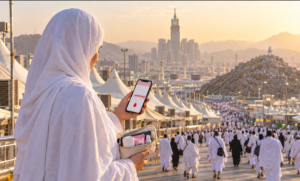
The rules of performing Hajj during periods are simple. You complete every ritual except Tawaf of the Kaaba and formal prayers. Wait until bleeding stops, take Ghusl, and then perform Tawaf. No penalty applies, and the Farewell Tawaf is waived.
Reviewed for accuracy against Sahih al-Bukhari, Sahih Muslim, and Sunan Abi Dawud.
Every Muslim woman dreams of performing Hajj. However, starting your period in Makkah can cause real anxiety.
Please do not worry. Allah (SWT) created women with this natural cycle. Therefore, Islam offers clear and merciful solutions.
In this guide, you will learn the rules of performing Hajj during periods from authentic Hadith. Each section also shows where scholars differ, so you know when to ask for guidance.
Quick Reference: What Is Allowed and What Is Not
First, scan this table. Then read the details in each section below.
| Ritual | Allowed During Periods? | Note |
|---|---|---|
| Ihram and Talbiyah | Yes | Take a bath before entering Ihram |
| Standing at Arafat | Yes | Make Dua and Dhikr throughout the afternoon |
| Muzdalifah and Mina | Yes | Stay overnight as usual |
| Stoning the Jamarat | Yes | No Wudu needed |
| Trimming the hair | Yes | Complete it as normal |
| Sa’i between Safa and Marwah | Yes, after a completed Tawaf | Sa’i does not require purity |
| Tawaf of the Kaaba | No | Wait until you are clean |
| Formal prayers (Salah) | No | Excused, with no make-up required |
| Entering Masjid al-Haram | No (majority view) | Make Dua from outside or your hotel |
Lessons from the Sunnah
You can easily understand the rules of performing Hajj during periods through Aisha (RA).
During the Farewell Pilgrimage, Aisha (RA) started her period near Makkah. She began to cry inside her tent because she feared missing Hajj.
The Prophet Muhammad (PBUH) entered her tent and asked about her distress. Then, he comforted her with these words:
“This is a matter that Allah has ordained for the daughters of Adam. So perform all the rituals that the pilgrims perform, except that you do not circumambulate the Kaaba until you are clean.”
— [Sahih al-Bukhari: 305, Sunan Abi Dawud: 1782]
Sahih Muslim (1211) records the same guidance. This Hadith shows that menstruation is a natural state. Thus, it does not stop your spiritual journey.
Notice what the Prophet (PBUH) did not say. He did not tell her to go home, and he did not call her Hajj invalid. Instead, he told her to keep going.
Why Allah Made This Concession
The Qur’an acknowledges menstruation as a natural condition that changes certain acts of worship (Qur’an 2:222). It never treats the woman herself as unclean or unwelcome.
Moreover, Allah (SWT) promises, “Allah does not burden a soul beyond its capacity” (Qur’an 2:286). This is why the rules of performing Hajj during periods pause only what a woman cannot reasonably do.
Rituals You Can Perform During Your Period
Under the rules of performing Hajj during periods, you can complete most rituals.
- Ihram: First, take a bath for cleanliness. Next, put on your Ihram clothes and recite the Talbiyah. The Prophet (PBUH) told Asma bint Umays (RA) to bathe and enter Ihram during postpartum bleeding (Sahih Muslim: 1209). Scholars apply the same ruling to menstruation.
- Arafat: You can stand at Mount Arafat on the 9th of Dhul Hijjah. Pray, make Dua, and recite Dhikr here. Standing at Arafat is the heart of Hajj, and purity is not a condition for it.
- Muzdalifah and Mina: You can stay overnight at Muzdalifah. In addition, you can stay in the tents at Mina.
- Stoning the Devil: You do not need Wudu to stone the Jamarat. Therefore, you can throw the pebbles yourself.
- Trimming the Hair: You can cut a fingertip length of your hair to leave Ihram, just like every other pilgrim.
- Dhikr and Dua: You can recite Dhikr, Istighfar, and Salawat anytime. You can also listen to the Qur’an throughout the day.
The Talbiyah: Your Constant Companion
Keep reciting the Talbiyah from Ihram until you throw the first pebble on the Day of Sacrifice (Sahih al-Bukhari: 1549). A period does not stop it.
- Arabic: لَبَّيْكَ اللَّهُمَّ لَبَّيْكَ، لَبَّيْكَ لَا شَرِيكَ لَكَ لَبَّيْكَ، إِنَّ الْحَمْدَ وَالنِّعْمَةَ لَكَ وَالْمُلْكَ، لَا شَرِيكَ لَكَ
- Transliteration: Labbayk Allahumma labbayk, labbayka la sharika laka labbayk, innal-hamda wan-ni’mata laka wal-mulk, la sharika lak.
- Meaning: Here I am, O Allah, here I am. Here I am; You have no partner, here I am. Indeed, all praise, blessings, and sovereignty belong to You. You have no partner.
- When to recite: Say it often after entering Ihram, especially when climbing, descending, or meeting other pilgrims.
Acts You Must Pause During Your Period
While following the rules of performing Hajj during periods, you pause two main acts.
- Tawaf of the Kaaba: You cannot perform Tawaf around the Kaaba until bleeding stops. Then, take Ghusl and complete it.
- Formal Prayers: You do not pray while bleeding, and you do not make those prayers up later. Aisha (RA) confirmed that women were told to make up fasts, but not prayers (Sahih Muslim: 335).
Most scholars also advise against entering Masjid al-Haram itself while bleeding. You can still make Dua anywhere, including your hotel room or from the outer areas.
Reciting the Qur’an: Where Scholars Differ
Scholars hold different views on Qur’an recitation during menstruation. The Hanafi, Shafi’i, and Hanbali schools generally discourage it, especially touching a printed mushaf. The Maliki school and many contemporary scholars allow recitation. They reason that a period can last many days.
If you want the safest path, fill your days with Dhikr, Dua, and Salawat. Listening to recitation is always permissible. Ask your group’s scholar if you wish to read from a phone screen.
Solutions for Special Situations
Logistical challenges can happen during Hajj. Here are practical solutions based on Islamic law:
|
Scenario |
Islamic Ruling |
|---|---|
|
Period starts before Ihram at the Miqat |
Take a bath, wear Ihram, and recite the Talbiyah. You do not need to be clean to enter Ihram (Sahih Muslim: 1209). |
|
Period starts before the Tawaf of Umrah (Tamattu’) |
Combine your Umrah and Hajj into one Ihram, as Aisha (RA) did. Then, continue with Hajj and perform one Tawaf when you are clean (Sahih Muslim: 1211). |
|
Period during mandatory Tawaf |
Wait until bleeding stops completely. Next, perform Ghusl and complete Tawaf al-Ziyarah. You do not need to pay any penalty. |
|
Period after finishing Tawaf |
You can perform Sa’i between Safa and Marwah immediately. This is because Sa’i does not require physical purity. |
|
Flight departure before period ends |
The Farewell Tawaf is completely waived for you. Prophet Muhammad (PBUH) allowed this for Safiyyah (RA) [Sahih al-Bukhari: 1757]. Ibn Abbas (RA) also reported this concession (Sahih al-Bukhari: 1755). |
If Your Group Cannot Wait for Tawaf al-Ziyarah
Tawaf al-Ziyarah is a pillar of Hajj, so this is the hardest scenario. The majority of scholars say you must wait until you are clean. Your Hajj stays valid, and you may delay the Tawaf beyond the days of Hajj without any penalty.
However, if your travel group cannot wait, some contemporary scholars offer a solution. They permit using high-absorbency hygiene protection to complete Tawaf out of absolute necessity.
Scholars disagree here, so ask a qualified scholar before you travel. Many Hajj groups also have a mufti who can advise you on the spot.
Your Hajj Days Step by Step
The rules of performing Hajj during periods change only a few moments of your journey. Here is how each day usually unfolds.
- 8th of Dhul Hijjah: Enter Ihram, recite the Talbiyah, and travel to Mina. Nothing changes for you here.
- 9th of Dhul Hijjah: Stand at Arafat after midday and make Dua until sunset. Afterward, travel to Muzdalifah and spend the night.
- 10th of Dhul Hijjah: Stone the largest Jamarat, offer the sacrifice, and trim your hair. Then you leave Ihram, except that marital relations stay forbidden until Tawaf al-Ziyarah.
- 10th to 13th of Dhul Hijjah: Perform Tawaf al-Ziyarah once you are clean. Meanwhile, keep stoning the Jamarat and staying at Mina.
- Departure: Leave without the Farewell Tawaf if you are still bleeding.
Keep one point in mind. The rules of performing Hajj during periods let you delay Tawaf al-Ziyarah, so a late Tawaf never cancels your Hajj.
Using Medication to Delay Periods
Many women consult doctors to delay their cycle before Hajj. Islamic scholars generally permit this if the medication does not harm your health.
If bleeding stops completely, you can offer prayers and perform Tawaf normally. However, avoid medication if it harms your health. Accepting Allah’s concessions is always acceptable too.
Start any trial course well before your departure. Side effects like spotting or irregular bleeding can appear, and you do not want surprises in Makkah.
Common Mistakes to Avoid
Many pilgrims worry unnecessarily because of rumors. Avoid these mistakes when applying the rules of performing Hajj during periods.
- Believing your Hajj is invalid. It is valid, as the Prophet (PBUH) told Aisha (RA).
- Skipping Arafat or Mina. These rituals do not require purity, so attend them fully.
- Taking pills without medical advice. Always ask a doctor first.
- Doing Tawaf while bleeding out of habit. Do this only if a qualified scholar confirms real necessity.
- Relying only on friends for rulings. Ask a scholar, because small details change the answer.
Practical Tips Before You Travel
- Talk to your group leader early. Ask how the group handles delayed Tawaf and extended stays.
- Plan your Tawaf al-Ziyarah date flexibly. Many pilgrims perform it on the 10th to 13th of Dhul Hijjah, but you may delay it.
- Pack extra hygiene supplies and spare Ihram clothing. Mina and Muzdalifah offer limited privacy.
- Save Dhikr and Dua lists on your phone. Then you always have something to recite.
- Note down your scholar’s contact number. You may need a ruling quickly.
Frequently Asked Questions (FAQ)
1. Can I look at the Kaaba and make Dua?
Answer: Yes, you can look at the Kaaba from hotel areas and make Dua. However, most scholars advise against entering the mosque while bleeding.
2. Is there a penalty for delaying Tawaf?
Answer: No, waiting for purity before Tawaf al-Ziyarah carries no financial penalty.
3. Is my Hajj valid if I miss the Farewell Tawaf?
Answer: Yes. The Farewell Tawaf is waived for women who are menstruating, and no compensation is due.
4. Can I read Islamic books on my phone?
Answer: Yes, you can read Dua books, Hadith, and Islamic reminders freely. For Qur’an recitation, scholars differ, as explained above.
5. What if my period stops during Hajj?
Answer: Take Ghusl as soon as bleeding stops completely. Then pray and perform Tawaf as normal.
Conclusion
The rules of performing Hajj during periods show how merciful Islam is toward women. You keep almost every ritual, and you lose nothing in reward.
Pause only Tawaf and prayer. Then continue with patience and Dhikr. Share this guide with a sister preparing for Hajj. Then explore our guide on Hajj preparation for women next.
Author Bio
Explore Islamic World Editorial Team
The Explore Islamic World research team prepares every guide with care. We check each ruling against Sahih al-Bukhari, Sahih Muslim, and the Sunan collections on Sunnah.com. Our goal is to help women perform Hajj with peace of mind.

Comments are closed.
[…] walking between Safa and Marwah in Sa’i, and finally cutting the hair in Halq or Taqsir. UmrahUmrah is a voluntary pilgrimage to Makkah. Muslims can perform it any time of the year, unlike Hajj, […]
[…] many classical commentators note that seeing the House of Allah often precedes an opportunity to perform Hajj or Umrah. If you have held a deep desire to visit the Sacred Mosque, this dream serves as a […]