





10 Mosques in Saudi Arabia Every Hajj and Umrah Pilgrim Should Visit
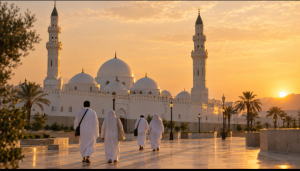
Mosques in Saudi Arabia carry more history than most pilgrims realize. In fact, several mark where Allah revealed a verse, Muslims fought a battle, or the Prophet (PBUH) himself once stood. This guide walks through ten of them, along with the history and fadhilat (virtue) behind each one.
Reviewed for accuracy against authentic Islamic sources, including the Quran, Sahih al-Bukhari, Sahih Muslim, and Sunan Ibn Majah.
Quick Summary: 10 Mosques in Saudi Arabia and Their Significance
| Mosque | Location | Why It Matters |
|---|---|---|
| Masjid al-Haram | Makkah | Houses the Kaaba, the direction of every Muslim’s prayer |
| Masjid an-Nabawi | Madinah | The Prophet’s Mosque and his final resting place |
| Masjid Quba | Madinah | The first mosque built in Islam |
| Masjid al-Qiblatain | Madinah | Where the Qiblah changed from Jerusalem to Makkah |
| Masjid Namirah | Arafat | Site of the Prophet’s Farewell Sermon |
| Masjid al-Khaif | Mina | Linked to earlier prophets in Islamic tradition |
| Masjid al-Jinn | Makkah | Where jinn are said to have accepted Islam |
| Masjid Dhul Hulaifah | Abyar Ali, Madinah | The miqat where pilgrims from Madinah enter Ihram |
| Masjid as-Sab’ah | Madinah | Marks the site of the Battle of the Trench |
| Masjid al-Ghamama | Madinah | Where the Prophet prayed for rain and led Eid prayer |
Masjid al-Haram: The Center of Every Pilgrimage
In fact, every Hajj and Umrah begins and ends at Masjid al-Haram, home to the Kaaba itself. Muslims everywhere face this direction five times daily, making it the most significant of all mosques in Saudi Arabia.
Moreover, circumambulating the Kaaba (Tawaf) and praying near the Station of Ibrahim connects pilgrims directly to early Islamic history. Tradition credits Prophet Ibrahim (AS) and Prophet Ismail (AS) with rebuilding the Kaaba. For this reason, no pilgrimage is complete without time spent here.
The mosque has grown far beyond its original size. As a result, it can now hold well over a million worshippers during peak Hajj days. Beyond Tawaf, pilgrims also perform Sa’i between the hills of Safa and Marwah. Many also drink from the Zamzam well, all within the same complex.
Masjid an-Nabawi: The Prophet’s Own Mosque
The Prophet Muhammad (PBUH) built Masjid an-Nabawi in Madinah himself, shortly after the Hijrah. Today, it houses his final resting place, making it the second holiest site in Islam.
Additionally, its distinctive Green Dome, added centuries later, now marks the location of the Prophet’s grave from a distance. Consequently, it has become one of the most recognizable mosques in the world.
Many pilgrims extend their trip specifically to pray here. This is especially true within Riyadh al-Jannah, a section the Prophet (PBUH) described as a garden from Paradise. Most Hajj and Umrah itineraries therefore include several days in Madinah just for this.
Successive expansions, particularly under the Saudi government, have grown the mosque far beyond its original small courtyard. Consequently, it now covers hundreds of thousands of square meters. Because Riyadh al-Jannah draws such large crowds, many pilgrims now book an entry slot through the official app.
The Mosque Where One Prayer Equals a Full Umrah
Masjid Quba is the very first mosque built in Islamic history. The Prophet (PBUH) constructed it right after his migration from Makkah. Afterward, he reportedly visited it every week, whether walking or riding.
An authentic hadith states its virtue directly.
“Whoever purifies himself in his house, then comes to the Quba’ Mosque and offers one prayer therein, will have a reward like that for Umrah.” (Sunan Ibn Majah, 1412)
This is why many pilgrims make a special trip to Quba, one of the most beloved mosques in Saudi Arabia.
Furthermore, mainstream commentators, including Ibn Kathir, also link Masjid Quba to a Quranic verse. It describes “a mosque founded on righteousness from the first day” (Surah At-Tawbah, 9:108). Allah revealed the verse to distinguish Quba from a rival mosque that hypocrites built nearby. Therefore, this small mosque carries great weight in early Islamic history.
The Mosque Where the Direction of Every Muslim’s Prayer Changed
Masjid al-Qiblatain marks one of the most significant turning points in early Islamic history. Then, during a prayer already in progress, the command came to switch the Qiblah from Jerusalem to Makkah. The entire congregation turned mid-prayer to face the Kaaba instead.
In fact, Sahih Muslim, 527, records this event. It gave the mosque its name, which literally means “the mosque of the two Qiblahs.” It also offers a tangible link to a moment that reshaped how every Muslim prays.
Historically, the mosque preserved two mihrabs side by side, one facing Jerusalem and one facing Makkah. Modern renovations, however, have since removed the old Jerusalem-facing niche. Even so, the site remains one of the most visited stops on any Madinah ziyarat tour.
The Mosque Where the Prophet Delivered His Final Message
Masjid Namirah stands in Wadi Uranah, right at the edge of Arafat. Here, the Prophet (PBUH) delivered his Farewell Sermon during his last Hajj. He addressed over 100,000 companions, then led the combined Dhuhr and Asr prayers.
Notably, the sermon covered the sanctity of life, property, and the rights owed between people. Because of this, many scholars consider it one of the earliest statements of universal human rights in history.
Shortly after this sermon, Allah revealed the verse declaring the religion complete.
“This day I have perfected for you your religion.” (Surah al-Ma’idah, 5:3)
Today, the annual Day of Arafat sermon is still delivered from this same mosque to hundreds of thousands of pilgrims.
Following major expansions, Masjid Namirah now covers roughly 110,000 square meters. It can hold around 350,000 worshippers at once. A Saudi-appointed scholar delivers the sermon each year. Meanwhile, it is broadcast live to the millions of pilgrims spread across the wider plain of Arafat.
The Mosque Linked to Seventy Earlier Prophets
Masjid al-Khaif sits at the base of a mountain in Mina, close to the smallest Jamarat. Islamic tradition holds that seventy prophets before Muhammad (PBUH) prayed at this same site. Consequently, this tradition earned it the nickname “Mosque of the Prophets.”
However, this particular narration comes through a chain scholars generally grade as weak. It is therefore best treated as popular tradition rather than firmly established fact. What is well documented, however, is that the Prophet (PBUH) himself prayed and camped here during Hajj. He specifically instructed the Muhajireen and Ansar where to set up their tents nearby.
The mosque reportedly underwent a major reconstruction in 1987, expanding capacity to around 25,000 worshippers. Because of its location near the smallest Jamarat, it is a convenient stop for pilgrims during the days of Mina.
The Mosque Named After Jinn Who Accepted Islam
Masjid al-Jinn stands near the Jannat al-Mu’alla cemetery in Makkah. Tradition marks it as the site where a group of jinn heard the Prophet (PBUH) reciting Quran and accepted Islam. Moreover, Companion Abdullah ibn Mas’ud reportedly accompanied him and later described the scene.
The Quran references this event directly.
“Say, [O Muhammad], ‘It has been revealed to me that a group of the jinn listened and said, “Indeed, we have heard an amazing Quran.”‘” (Surah al-Jinn, 72:1)
In short, the mosque is a quiet reminder that the Prophet’s message reached beyond the human world.
Interestingly, locals also know it as Masjid al-Bay’ah. This is because it marks the spot where the jinn reportedly pledged allegiance after accepting Islam. It sits within easy walking distance of the Grand Mosque. As a result, it is a quick addition to a Makkah itinerary, not a separate trip.
The Exact Spot Where Every Pilgrim’s Ihram Begins
Masjid Dhul Hulaifah, also known as Abyar Ali, sits about seven kilometers southwest of Masjid an-Nabawi. It is, therefore, the designated miqat for pilgrims traveling from Madinah, meaning pilgrims must enter Ihram here, not later.
Reportedly, builders first raised the current mosque in the Umayyad period and have expanded it many times since. Today it can accommodate several thousand worshippers preparing for their journey toward Makkah.
In addition, other miqat points exist for pilgrims arriving from different directions, including Al-Juhfah, Qarn al-Manazil, and Yalamlam. Pilgrims flying directly into Jeddah, however, usually enter Ihram on the plane itself, before it crosses over these boundary lines.
The Prophet (PBUH) set this boundary directly.
“Allah’s Messenger (PBUH) had fixed Dhul Hulaifah as the Miqat for the people of Madinah.” (Sahih al-Bukhari, 1524)
For many pilgrims, then, stepping into Ihram at this mosque in Saudi Arabia marks the true beginning of their journey.
The Historic Site Where a Trench Once Saved Madinah
Masjid as-Sab’ah, or the Seven Mosques, sits along the western edge of Mount Sala’ in Madinah. Historically, Muslims dug a defensive trench here during the Battle of Khandaq. Companions including Salman al-Farisi, Abu Bakr, and Ali (RA) are each commemorated at their own small mosque nearby.
Importantly, the trench itself, dug on the suggestion of Salman al-Farisi, was an unfamiliar tactic in Arabian warfare. As a result, it caught the invading coalition of roughly ten thousand fighters completely off guard.
This 27-day siege, described in Surah al-Ahzab, ended in a decisive Muslim victory without major open combat. Ultimately, the trench strategy was largely responsible. This site is one of the most historic mosques in Saudi Arabia. Walking through it today gives pilgrims a direct sense of the challenges the earliest Muslims overcame.
Of the original seven, Masjid al-Fatah is the largest and best preserved. It sits on the hill where the Prophet’s (PBUH) own command post reportedly stood. Meanwhile, several smaller mosques, including those linked to Fatima and Umar, have fallen into disrepair, and authorities removed others. Only a handful still stand.
The Mosque Where the Prophet Prayed for Rain
Masjid al-Ghamama sits a short walk from Masjid an-Nabawi. Reportedly, the Prophet (PBUH) prayed Salat al-Istisqa here, a special prayer for rain, during a drought. According to tradition, a cloud shaded him as he prayed, giving the mosque its name, which means “the cloud.”
The same location later hosted an unusual funeral prayer. In this case, the Prophet (PBUH) prayed in absentia for Najashi, the Christian king of Abyssinia. Najashi had sheltered early Muslim migrants. Indeed, few such prayers were ever performed for someone not physically present.
Additionally, the same site hosted Eid prayers during the final years of the Prophet’s (PBUH) life. It remains a peaceful, less-crowded stop among the mosques in Saudi Arabia for pilgrims following the earliest Muslim community’s footsteps.
The mosque was reportedly first built under Umar bin Abdulaziz and has been rebuilt several times. Most recently, the renovation under King Salman added its distinctive black basalt cladding. Daily prayers are not held here, because it sits so close to Masjid an-Nabawi. This keeps its atmosphere notably calmer than the main mosque nearby.
Planning Your Visit to These Mosques in Saudi Arabia
Because most of these mosques in Saudi Arabia cluster around Makkah and Madinah, planning is simple. A single Hajj or Umrah trip can therefore cover all ten. Madinah alone holds seven of them, making it worth allocating extra days there rather than rushing through.
Fortunately, local guides and hotel travel desks in both cities typically arrange short group visits, known as ziyarat tours. These often cover Quba, Qiblatain, the Seven Mosques, and Ghamama in a single half-day trip. However, Arafat and Mina sites, including Namirah and al-Khaif, are only accessible during the Hajj days themselves.
Meanwhile, Umrah travelers outside Hajj season can visit Masjid al-Jinn and Madinah’s historic mosques year-round. Both also combine easily with regular prayer visits. Booking one shared taxi or small tour van for the Madinah sites is usually more practical than visiting each separately. Several of them, after all, sit within a few minutes of one another.
Frequently Asked Questions
Do I need to visit all ten mosques to complete Hajj or Umrah?
No, none of these additional mosques are obligatory for a valid Hajj or Umrah. Instead, visiting them is a recommended act of remembrance and historical connection, not a pillar of the pilgrimage itself.
Which of these mosques must pilgrims from Madinah visit before starting Ihram?
Masjid Dhul Hulaifah is not optional like the others, since it is the fixed miqat for anyone travelling from Madinah. Therefore, Ihram must begin at or before this point for the pilgrimage to be valid.
Is the story about seventy prophets at Masjid al-Khaif authentic?
Scholars generally grade the specific narration as weak in its chain of transmission. People still repeat it widely as popular tradition, but it is not a firmly established hadith.
Can these mosques be visited outside the Hajj season?
Makkah, Madinah, and Mina-based mosques like al-Khaif are generally open to visitors during Umrah trips throughout the year. Masjid Namirah, however, is primarily accessible on the Day of Arafat during Hajj itself.
Why do some of these mosques matter more historically than religiously?
A few, like the Seven Mosques, mark historical events rather than carrying a specific stated virtue in hadith. They still hold value by connecting pilgrims to real events from the earliest years of Islam.
Is it better to visit these mosques alone or with a guide?
A local guide often adds useful historical context, especially at sites like the Seven Mosques. Otherwise, the details there are easy to miss without explanation. Still, visiting alone works fine too, particularly for well-marked sites like Quba or Qiblatain.
Walking Through History on Your Next Pilgrimage
These ten mosques in Saudi Arabia turn a Hajj or Umrah trip into a walk through the Seerah, one location at a time. Overall, each site connects directly to a verse, a hadith, or an event that shaped the early Muslim community.
Ultimately, half a day in Madinah or Makkah at a few of these mosques in Saudi Arabia adds real depth. Few other trips, after all, let you stand in the exact place where history and faith intersect this closely.
Author Description/Bio
Explore Islamic World Editorial Team
Our editorial team grounds every article in authentic Islamic sources, including the Quran, Sahih al-Bukhari, Sahih Muslim, and Sunan Ibn Majah. Each verse and hadith is checked against Sunnah.com references before publication.

Comments are closed.
[…] much of the courtyard sits under open sky. Many pilgrims combine their visit here with a trip to Al-Masjid an-Nabawi in Medina, roughly a 450-kilometer journey by road or a short domestic […]