





Hajj in a Dream: 9 Islamic Meanings That Will Move Your Heart
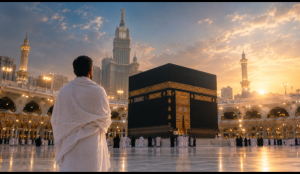
Hajj in a dream is usually a sign of repentance, spiritual renewal, and closeness to Allah (SWT). Scholars explain that the exact meaning depends on what you saw and your own circumstances. However, a dream never replaces the real pilgrimage.
Written by the Explore Islamic World Editorial Team. Reviewed for accuracy against authentic sources, including the Qur’an, Sahih al-Bukhari, and Sahih Muslim.
Many Muslims wake up from this dream with a racing heart and a deep longing. Some cry. Others feel a calm they cannot explain. Therefore, this guide walks through each scene, from Ihram to Arafat, and explains what scholars say about it.
What Does Hajj in a Dream Mean in Islam?
Most scholars view Hajj in a dream as a good vision. It points to a sincere heart, a wish to return to Allah (SWT), or good news ahead. Additionally, it often appears when a believer feels spiritually distant and wants a fresh start.
The Prophet Muhammad (PBUH) taught that dreams come from different sources. He said a good dream comes from Allah, while a bad dream comes from Shaytan. This teaching appears in Sahih al-Bukhari 6984 and Sahih Muslim 2261. Because Hajj is an act of worship, a calm and uplifting vision of it fits the first category.
Nevertheless, no authentic text assigns a fixed meaning to each dream scene. Interpretations come from scholarly experience and general principles. Hence, treat every reading below as guidance, not certainty.
Islamic Evidence for Dreams of the Holy House
The Qur’an itself describes a vision about the sacred mosque. Allah (SWT) confirmed the vision of His Messenger and promised safe entry into Al-Masjid Al-Haram. Surah Al-Fath 48:27 records this promise. Commentators connect it with the dream of the Prophet (PBUH) before the Treaty of Hudaybiyyah.
Furthermore, the dream of Prophet Ibrahim (AS) shows that a prophet’s vision carries real weight (Qur’an 37:102). That same prophet, together with Ismail (AS), raised the foundations of the Kaaba (Qur’an 2:127). Therefore, a vision tied to the Kaaba deserves thoughtful reflection.
Meanwhile, a believer’s dream is a source of glad tidings, not revelation. The Prophet (PBUH) called a righteous believer’s true dream one of forty-six parts of prophecy. Sahih al-Bukhari 6983 records this hadith.
How to Tell a True Hajj Dream from an Ordinary One
Many believers ask whether Hajj in a dream is a true vision. The Prophet (PBUH) described three kinds of dreams. One brings good news from Allah (SWT). Another comes as a disturbance from Shaytan, and the third reflects your own thoughts. Sahih al-Bukhari 7017 records this teaching.
Therefore, ask yourself a few honest questions. Did you watch Hajj videos or discuss the pilgrimage before sleep? If so, your mind may simply have replayed it. By contrast, a clear, peaceful, and uplifting dream is more likely good news.
Similarly, a frightening or shameful scene is not a good vision. In that case, seek refuge in Allah (SWT) from Shaytan and spit lightly to your left three times. Also, avoid telling anyone about it. The Prophet (PBUH) taught this in Sahih Muslim 2261.
Quick Guide to Hajj Dream Meanings
This table summarizes Hajj in a dream at a glance, with the most common scenes and their meanings.
| Dream Scene | Common Meaning | Spiritual Lesson |
|---|---|---|
| Wearing Ihram | Repentance and humility | Leave pride behind |
| Tawaf | Nearness to Allah | Stay steady in worship |
| Safa and Marwa | Relief after hardship | Keep striving with trust |
| Arafat | Forgiveness and dua | Ask Allah sincerely |
| Jamarat | Victory over temptation | Resist Shaytan |
| Zamzam | Healing and provision | Rely on Allah’s mercy |
| Sacrifice | Gratitude and giving | Give for Allah’s sake |
| Talbiyah | Answering Allah’s call | Respond to good |
| Missing Hajj | A hidden obstacle | Prepare and repent |
Nine Scenes and What They Mean
Each scene below shows how Hajj in a dream can speak through a different ritual. Read the one that matches your vision first. Then, compare it with the others for a fuller picture.
1. Wearing Ihram
Interpreters commonly link Ihram with repentance and humility. Men’s Ihram consists of two plain white sheets, which remove every sign of wealth and rank. Therefore, this scene often calls you to drop pride and start clean.
It may also reflect a heart that wants to leave a sin. Moreover, the Prophet (PBUH) said a pilgrim who avoids obscenity and sin returns as sinless as a newborn. Sahih al-Bukhari 1521 records this hadith.
2. Making Tawaf Around the Kaaba
Tawaf is commonly linked with nearness to Allah (SWT) and steady faith. Pilgrims circle the Kaaba seven times, which shows a life organized around one center. Therefore, this dream often reminds you to keep worship at the heart of your day.
If the Kaaba feels close and peaceful, the vision is a good sign. However, if you struggle through a heavy crowd, it may reflect pressure that distracts you from prayer.
3. Walking Between Safa and Marwa
This walk recalls Hajar (RA), who ran between the two hills searching for water for her infant son Ismail (AS). Because of that history, the scene commonly signals patience and relief after hardship. Thus, it can bring hope if you face money or family stress.
Allah (SWT) names Safa and Marwa among His symbols (Qur’an 2:158). Hence, this dream encourages you to keep striving while trusting Him.
4. Standing at Arafat
Arafat is the heart of Hajj and a place of heartfelt dua. A dream set on this plain commonly points to forgiveness, sincere repentance, and answered prayers. In addition, it may invite you to review your life honestly.
The Prophet (PBUH) said Allah frees more servants from Hellfire on Arafah than on any other day. Sahih Muslim 1348 records this hadith.
5. Throwing Pebbles at the Jamarat
Stoning the pillars symbolizes rejecting Shaytan. The rite recalls the firm stand of Ibrahim (AS) against his whispers. Therefore, this scene commonly points to victory over temptation or a harmful habit.
Similarly, it can warn you to guard against whispers that pull you away from obedience. As a result, take it as a prompt to break one bad pattern this week.
6. Drinking Zamzam Water
Allah (SWT) made Zamzam flow for Hajar (RA) and Ismail (AS). A dream of drinking it commonly signals healing, lawful provision, or beneficial knowledge. Moreover, many interpreters connect it with relief after long worry.
Consequently, if you feel unwell or anxious, this dream can bring real comfort. Still, continue medical treatment and trust Allah (SWT) with the outcome.
7. Offering the Sacrifice
The sacrifice recalls the obedience of Ibrahim (AS) and Ismail (AS) (Qur’an 37:102-107). In a dream, it commonly points to gratitude, charity, or giving up something you love for Allah’s sake. Therefore, it may encourage you to spend generously or keep a promise.
It can also signal relief from a worry. For example, Allah (SWT) replaced Ismail (AS) with a great sacrifice, which shows His mercy after a hard test.
8. Hearing or Reciting the Talbiyah
The Talbiyah is the pilgrim’s answer to Allah’s call. Hearing it in a dream commonly signals good news or an invitation toward worship. Additionally, it may reflect a sincere wish to visit the Holy House soon.
The Arabic text, meaning, and recitation time appear in the dua section below.
9. Failing to Reach or Complete Hajj
Some people dream of missing the flight, losing the group, or failing to enter Makkah. This does not mean Allah (SWT) rejected you. Instead, interpreters often read it as a reminder to prepare, repent, or remove a hidden obstacle.
For example, unsettled debts, a family conflict, or a delayed intention may be holding you back. Therefore, treat the dream as motivation to start saving, planning, and making dua. Remoember that Hajj becomes obligatory only for those who are able to make the journey (Qur’an 3:97).
Hajj in a Dream for Different People
The same scene can carry a different message for each dreamer. Scholars therefore consider the dreamer’s situation. Even so, the core meaning remains hopeful.
- Single woman: It commonly signals purity, good character, and a righteous future. It may also encourage her to seek knowledge.
- Married woman: It often points to family harmony, patience, and shared worship with her spouse.
- Man: It can signal responsibility, honest earnings, and repentance from past mistakes.
- Someone who never performed Hajj: It often reflects deep longing and may inspire serious planning.
- Someone who already performed Hajj: It may remind them to keep the humility they gained.
- Sick person: It commonly brings hope for healing and relief.
Seeing Someone Else Perform Hajj in a Dream
You may see a parent, a friend, or even a stranger performing the pilgrimage. Interpreters commonly read this as good news for that person’s faith or circumstances. Additionally, it may prompt you to call them, pray for them, or help with an upcoming journey.
Hajj in a dream that includes family members can also remind you to renew family ties. Therefore, consider reaching out to a relative you have not spoken to in a while.
Turning a Hajj Dream into Real Preparation
Hajj in a dream often stirs a strong wish to act. Channel that feeling into a plan rather than a sudden decision. Therefore, begin with an honest look at your health, savings, and family obligations.
Hajj requires early planning in most countries. First, check your country’s official Hajj registration process and its deadlines. Next, confirm the visa, vaccination, and health requirements. Finally, set a monthly savings target that does not leave your family in need.
Women should also confirm the travel requirements that apply to them before booking. Additionally, settle any debts and seek forgiveness from people you have wronged. A dream can open the door, but sincere preparation walks you through it.
Umrah Dream or Hajj Dream: Is There a Difference?
Both dreams share a hopeful tone, yet each carries a slightly different weight. The Prophet (PBUH) said each Umrah expiates the sins committed since the previous one. Sahih al-Bukhari 1773 records this hadith, along with the reward of an accepted Hajj, which is Paradise.
Therefore, an Umrah dream commonly signals forgiveness and a fresh page after a mistake. In contrast, Hajj in a dream often marks a bigger turning point, such as returning sincerely to Allah (SWT).
What to Do After Waking Up from a Hajj Dream
Hajj in a dream calls for a calm and grateful response. Follow these simple steps.
- Say “Alhamdulillah” and thank Allah (SWT) for the good vision.
- Renew your intention to perform Hajj when you are able.
- Make sincere dua for acceptance and ease.
- Share the dream only with a trusted, knowledgeable person.
- Avoid major financial or life decisions based on the dream alone.
Dua 1: The Talbiyah
Arabic: لَبَّيْكَ اللَّهُمَّ لَبَّيْكَ، لَبَّيْكَ لَا شَرِيكَ لَكَ لَبَّيْكَ، إِنَّ الْحَمْدَ وَالنِّعْمَةَ لَكَ وَالْمُلْكَ، لَا شَرِيكَ لَكَ
Transliteration: Labbaik Allahumma labbaik, labbaika la sharika laka labbaik, innal-hamda wan-ni’mata laka wal-mulk, la sharika lak.
Meaning: Here I am, O Allah, here I am. Here I am; You have no partner; here I am. Indeed, all praise, favor, and sovereignty belong to You. You have no partner.
When to recite: Pilgrims recite it from entering Ihram until the stoning of Jamrat al-Aqabah on the Day of Sacrifice. Umrah pilgrims stop when they begin Tawaf. Sahih al-Bukhari 1549 and Sahih Muslim 1184 record the Prophet’s (PBUH) Talbiyah.
Dua 2: Asking Allah to Accept Your Worship
Arabic: رَبَّنَا تَقَبَّلْ مِنَّا ۖ إِنَّكَ أَنتَ السَّمِيعُ الْعَلِيمُ
Transliteration: Rabbana taqabbal minna innaka antas-Sami’ul-‘Alim.
Meaning: Our Lord, accept this from us. Indeed, You are the All-Hearing, the All-Knowing (Qur’an 2:127).
When to recite: Ibrahim (AS) and Ismail (AS) prayed this while raising the Kaaba. Muslims recite it after good deeds, and it also suits your intention for Hajj or Umrah.
Common Mistakes When Reading Hajj Dreams
- Treating the dream as a substitute for the obligatory Hajj. A dream never fulfills this pillar.
- Believing a difficult scene means Allah (SWT) has rejected you.
- Trusting dream dictionaries attributed to Ibn Sirin without checking their authenticity.
- Telling the dream to everyone instead of one trusted person.
- Selling property or changing your life plans because of a dream.
- Ignoring the real message of Hajj in a dream, which is sincere repentance and action.
Frequently Asked Questions
Is seeing Hajj in a dream a good sign?
Yes, most scholars treat Hajj in a dream as a good vision. It commonly signals repentance, hope, and nearness to Allah (SWT). However, the details of the dream and your own situation shape the final meaning.
Does Hajj in a dream mean I will perform Hajj soon?
Not necessarily. Some dreams reflect longing, while others carry a message about repentance or patience. Therefore, make your intention, save steadily, and leave the timing to Allah (SWT).
What does Tawaf around the Kaaba mean in a dream?
Tawaf commonly points to nearness to Allah (SWT) and steady faith. Additionally, a peaceful circling suggests contentment, while a crowded one may reflect worldly distractions.
What if I dream that I could not complete Hajj?
This does not mean Allah (SWT) rejected you. Instead, it often serves as a reminder to repent, settle debts, and prepare. Moreover, keep making dua for ease.
Can a dream replace the real Hajj?
No. Allah (SWT) made Hajj obligatory for those who are able to make the journey (Qur’an 3:97). Therefore, a dream, however beautiful, never fulfills this pillar.
Key Takeaways
- Hajj in a dream is usually a good vision tied to repentance and renewal.
- Each ritual scene carries its own commonly cited meaning.
- Interpretations are scholarly guidance, not certainty.
- A dream never replaces the obligatory pilgrimage.
- Respond with gratitude, dua, and sincere preparation.
Final Thoughts on Hajj Dreams
Hajj in a dream invites you to look inward and move closer to Allah (SWT). Whether you saw Ihram, Arafat, or Zamzam, the message stays hopeful. However, the real response begins after you wake up. Make sincere dua, keep your intention alive, and take one small step toward righteousness today.
Share this guide with a loved one who recently saw the Holy House in a dream. May Allah (SWT) invite us all to His sacred house and accept our worship. Ameen.
About the Author
Explore Islamic World Editorial Team: Our team writes and reviews every article against the Qur’an and authentic hadith collections, mainly Sahih al-Bukhari and Sahih Muslim, with references checked on Sunnah.com. We present mainstream scholarly positions and note where scholars differ.
