





Hajj vs Umrah Difference: Which Pilgrimage Is Right for You?
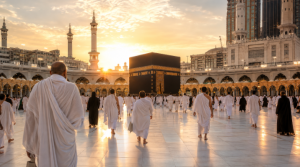
The Hajj vs Umrah difference comes down to obligation, timing, and rituals. Hajj is a mandatory pillar of Islam with fixed dates in Dhul Hijjah. Umrah is a shorter pilgrimage you can perform any time of year, with fewer rituals.
Reviewed for accuracy against authentic sources.
Many Muslims confuse Hajj and Umrah, because both end at the Kaaba. Yet each pilgrimage asks for something different from you. This guide explains the Hajj vs Umrah difference step by step, so you can choose the right trip with confidence.
The Hajj vs Umrah Difference at a Glance
This table shows the Hajj vs Umrah difference in one glance. Then read the details in each section below.
| Feature | Hajj | Umrah |
|---|---|---|
| Ruling | Obligatory once in a lifetime for those able | Obligatory once for Shafi’i and Hanbali scholars; strongly recommended for Hanafi and Maliki scholars |
| Timing | 8th to 12th or 13th of Dhul Hijjah | Any time of the year |
| Pillar of Islam | Yes, the fifth pillar | No |
| Core rituals | Ihram, Arafat, Muzdalifah, Mina, Tawaf, Sa’i, sacrifice | Ihram, Tawaf, Sa’i, and trimming the hair |
| Duration | Five to six days for the core rituals | A few hours for the rituals |
| Cost and crowds | Higher cost, very large crowds | Lower cost, calmer outside Ramadan |
What Is Hajj?
Hajj is the fifth pillar of Islam. Every financially and physically able Muslim must perform it at least once in a lifetime. The Prophet (PBUH) told the people that Allah had made Hajj obligatory, so they should perform it (Sahih Muslim: 1337).
The pilgrimage runs on a fixed window each year. It spans the 8th to the 12th or 13th of Dhul Hijjah. Millions of pilgrims travel to Makkah during these days. As a result, Hajj becomes one of the largest annual gatherings on Earth.
Hajj follows a strict sequence of rituals. Pilgrims stand at Arafat, stay overnight at Muzdalifah, and throw pebbles at the pillars in Mina. They also complete Tawaf and Sa’i.
Because of this rigid structure, Hajj demands careful planning and physical stamina. Many pilgrims prepare for a full year.
What Is Umrah?
Umrah is often called the lesser pilgrimage. It is not one of the five pillars, but it carries deep spiritual reward. Unlike Hajj, you can perform it in any month, which makes it accessible to many more Muslims.
Umrah involves fewer rituals than Hajj. Pilgrims enter Ihram, perform Tawaf around the Kaaba, and complete Sa’i between Safa and Marwah. Finally, they shave or trim their hair.
The rituals themselves take a few hours. However, many pilgrims extend their trip to visit Madinah as well.
Five Key Differences Between the Two Pilgrimages
Five factors shape the Hajj vs Umrah difference. Each one explains why you cannot swap one pilgrimage for the other.
1. Religious Obligation
Allah (SWT) says, “And [due] to Allah from the people is a pilgrimage to the House” (Qur’an 3:97). The verse limits this duty to whoever is able to make the way. Therefore, Hajj is obligatory once in a lifetime for every eligible Muslim. Sahih al-Bukhari (8) also lists it among the five pillars.
Umrah is where scholars differ. The Shafi’i and Hanbali schools consider it obligatory once. Hanafi and Maliki schools call it a strongly recommended Sunnah. Either way, scholars encourage you to perform it whenever you can.
2. Timing
Hajj happens only on specific days in Dhul Hijjah. Missing that window means waiting until next year.
Umrah has no fixed calendar. You can perform it in any month, including during the Hajj season itself.
3. Duration
A full Hajj typically spans five to six days for the core rituals. Many pilgrims stay longer to visit surrounding holy sites.
Umrah usually takes a few hours to complete. Travel and Madinah visits, however, often stretch the trip to a week or more.
4. Rituals Involved
Hajj includes standing at Arafat, staying at Muzdalifah, and stoning the pillars. It also includes the animal sacrifice and Tawaf al-Ifadah.
Umrah only requires Ihram, Tawaf, Sa’i, and hair trimming. This shorter ritual set is one reason Umrah suits travelers with limited time.
5. Cost and Crowds
Hajj packages generally cost more because of peak-season demand and extended logistics. Crowds are enormous, and the rituals follow a tight schedule.
Umrah packages, especially outside Ramadan, tend to be more affordable and less crowded. As a result, pilgrims often enjoy a calmer experience at the holy sites.
Who Must Perform Hajj? The Five Conditions
Hajj becomes obligatory when five conditions meet in one person. Scholars list them as Islam, sanity, adulthood, freedom, and ability.
Ability covers health, travel costs, and safe passage. You also need enough money to cover your family’s needs while you are away.
Women follow additional travel requirements, and these differ by country and scholar. Check the current rules with your group before you book.
These conditions clarify the Hajj vs Umrah difference in practice. Hajj is a duty only for those who can afford it, so no one should go into debt for it.
Pillars and Required Acts Inside Each Pilgrimage
Not every ritual carries the same weight. Scholars divide them into pillars and required acts, and the difference matters if you make a mistake.
- Hajj pillars: Ihram, standing at Arafat, Tawaf al-Ifadah, and Sa’i. Most scholars agree on these four.
- Umrah pillars: Ihram, Tawaf, and Sa’i. Hanafi scholars treat Sa’i as a required act rather than a pillar.
Missing a pillar invalidates the pilgrimage until you complete it. Skipping a required act, such as staying at Muzdalifah, usually calls for a compensation sacrifice.
Understanding this part of the Hajj vs Umrah difference saves you from panic later. Ask a knowledgeable scholar if something goes wrong.
Similarities Between Hajj and Umrah
Despite their differences, both pilgrimages share a spiritual foundation. Both begin with entering Ihram, a sacred state with specific clothing and behavioral restrictions. Each pilgrimage also includes Tawaf around the Kaaba and Sa’i between Safa and Marwah.
Preparing for either trip? Our guide on What Is Ihram in Islam explains the rules and meaning of this first step.
Both pilgrims also recite the Talbiyah after entering Ihram (Sahih al-Bukhari: 1549). It is the call that answers Allah’s invitation.
- Arabic: لَبَّيْكَ اللَّهُمَّ لَبَّيْكَ، لَبَّيْكَ لَا شَرِيكَ لَكَ لَبَّيْكَ، إِنَّ الْحَمْدَ وَالنِّعْمَةَ لَكَ وَالْمُلْكَ، لَا شَرِيكَ لَكَ
- Transliteration: Labbayk Allahumma labbayk, labbayka la sharika laka labbayk, innal-hamda wan-ni’mata laka wal-mulk, la sharika lak.
- Meaning: “Here I am, O Allah, here I am. Here I am; You have no partner, here I am. Indeed, all praise, blessings, and sovereignty belong to You. You have no partner.”
- When to recite: Say it often after entering Ihram. Hajj pilgrims stop when they throw the first pebble on the Day of Sacrifice. Umrah pilgrims stop when they begin Tawaf.
Both pilgrimages also draw pilgrims back to the same holy sites in Makkah. They trace back to the story of Prophet Ibrahim (AS), his wife Hajar (RA), and his son Ismail (AS). This shared history connects every pilgrim to one enduring tradition of faith.
Step-by-Step Overview of Both Pilgrimages
Seeing the steps side by side makes the Hajj vs Umrah difference clear. Start with the shorter one.
How Umrah Works
- Ihram: Enter Ihram at the Miqat, make your intention, and start reciting the Talbiyah.
- Tawaf: Walk seven circuits around the Kaaba, starting at the Black Stone.
- Prayer: Pray two rak’ahs behind Maqam Ibrahim if the crowd allows.
- Sa’i: Walk seven laps between Safa and Marwah, starting at Safa.
- Trimming: Shave or trim your hair to leave Ihram.
How Hajj Works
- 8th of Dhul Hijjah: Enter Ihram and travel to Mina.
- 9th of Dhul Hijjah: Stand at Arafat from midday until sunset. Then spend the night at Muzdalifah.
- 10th of Dhul Hijjah: Stone the largest pillar, offer the sacrifice, and trim your hair. Then perform Tawaf al-Ifadah.
- 11th to 13th of Dhul Hijjah: Stone all three pillars after midday and stay at Mina. Leave on the 12th if you choose to hasten.
- Departure: Perform the Farewell Tawaf before you leave Makkah.
Spiritual Meaning Behind Each Pilgrimage
Hajj relives the sacrifice of Prophet Ibrahim (AS) and his family. Sa’i recalls Hajar (RA) running between Safa and Marwah in search of water. Allah (SWT) then answered her with Zamzam.
The Day of Arafah carries special mercy. Allah frees more servants from the Fire on that day than on any other. The Prophet (PBUH) taught this (Sahih Muslim: 1348).
Umrah offers a quieter reset. You can repeat it often, so it keeps your heart tied to Makkah between Hajj seasons.
Both pilgrimages also teach humility. In Ihram, every pilgrim wears simple white clothing, so rich and poor stand as equals. Atmosphere is part of the Hajj vs Umrah difference too: Hajj gathers millions, while Umrah often feels more personal.
Rewards of Each Pilgrimage
The Prophet (PBUH) said, “Umrah is an expiation for the sins committed between it and the previous Umrah. And the reward of an accepted Hajj is nothing except Paradise” (Sahih al-Bukhari: 1773).
This Hadith shows that both pilgrimages bring great reward. It also shows that you can repeat Umrah, while Hajj is an obligation you complete once.
In addition, the Prophet (PBUH) taught that Umrah in Ramadan equals Hajj in reward (Sahih al-Bukhari: 1782). However, scholars explain that it does not replace the Hajj obligation.
Which One Should You Perform First?
If Hajj is already obligatory on you, do not delay it for Umrah. Allah (SWT) commands, “And complete the Hajj and Umrah for Allah” (Qur’an 2:196).
If neither is obligatory yet, most scholars recommend Umrah first. It lets first-time pilgrims learn the rituals and the environment. They also avoid the pressure of the fixed Hajj schedule.
Many Muslims perform Umrah several times in their lives. They then reserve Hajj for the time when they are fully prepared, both financially and spiritually.
Money matters too. If you can afford only one trip this year, choose the pilgrimage that is obligatory on you.
Planning your first trip? Our How to Perform Umrah Step by Step guide walks through the whole process. Next, the Best Time to Perform Umrah guide helps you choose the ideal season based on weather and crowd levels.
Can You Perform Umrah During Hajj Season?
Yes. Pilgrims often combine Umrah with Hajj in one trip. There are three methods, and each has its own rulings on the sacrifice.
| Method | How It Works | Sacrifice Required? |
|---|---|---|
| Tamattu’ | Perform Umrah first, exit Ihram, then enter a new Ihram for Hajj on the 8th of Dhul Hijjah | Yes |
| Qiran | Combine the intentions of Umrah and Hajj in one Ihram, without exiting in between | Yes |
| Ifrad | Perform Hajj only, without Umrah | No |
The Qur’an mentions the offering for Tamattu’ directly (Qur’an 2:196). Consult a knowledgeable scholar before choosing, because your travel plan and your group’s schedule affect the best method.
Planning Tips for Either Pilgrimage
- Book early for Hajj. Hajj packages fill up many months ahead, while Umrah can be booked closer to your travel date.
- Check official requirements. Confirm visa and health rules on official channels before you pay any operator.
- Choose a licensed operator. Ask for the full itinerary, hotel distance, and what the price includes.
- Prepare your body. Tawaf and Sa’i can cover several kilometres in total, so practice walking beforehand.
- Pack for Ihram. Men need two unstitched white cloths, and women need modest, loose clothing.
Common Mistakes Pilgrims Make
Many people misunderstand the Hajj vs Umrah difference. Avoid these common errors.
- Treating Umrah as a replacement for Hajj. It does not fulfill the Hajj obligation, even in Ramadan.
- Delaying Hajj without a valid reason. Once you are able, do not postpone it.
- Booking Hajj late. Hajj packages fill up many months ahead, so start early.
- Skipping Umrah as practice. A first Umrah teaches Ihram, Tawaf, and Sa’i in a calmer setting.
- Ignoring group rules. Large Hajj groups follow strict timings, so listen to your guide.
Frequently Asked Questions
Is Umrah compulsory like Hajj?
Answer: Scholars differ. Shafi’i and Hanbali scholars say it is obligatory once. Hanafi and Maliki scholars call it a strongly recommended Sunnah.
Does Umrah replace Hajj?
Answer: No. Umrah never fulfills the Hajj obligation, even when performed in Ramadan.
Can I perform Umrah during the Hajj season?
Answer: Yes. Pilgrims do so through Tamattu’ or Qiran, and both methods require a sacrifice.
How long does each pilgrimage take?
Answer: Hajj takes five to six days for the core rituals. Umrah rituals take a few hours, although the whole trip usually lasts longer.
Can I perform Umrah more than once?
Answer: Yes. Many scholars allow you to repeat Umrah on separate trips as often as you like.
Is my Hajj valid if I skip Umrah?
Answer: Yes. Ifrad is a valid method, and it means performing Hajj alone without Umrah.
What is the main difference between the two?
Answer: The main Hajj vs Umrah difference is obligation. Hajj is a pillar with fixed dates, while Umrah is flexible.
Which is cheaper, Hajj or Umrah?
Answer: Umrah is usually cheaper, especially outside Ramadan. Hajj packages cost more because of peak demand.
Final Thoughts
Obligation, timing, and scale sit at the heart of the Hajj vs Umrah difference. Hajj is a mandatory, once-in-a-lifetime pillar performed on fixed dates. Umrah is a flexible pilgrimage you can repeat throughout life.
Both carry immense reward, and both lead to the same sacred ground in Makkah. Decide which one fits your means today, then start preparing with a sincere intention. Share this guide with a family member who is planning the same trip.
Author Bio
Explore Islamic World Editorial Team
The Explore Islamic World editorial team writes each guide from Sahih al-Bukhari, Sahih Muslim, and the Qur’an. We verify every Hadith number against Sunnah.com before publishing. Our goal is to help Muslims plan Hajj and Umrah with clarity and confidence.

Comments are closed.
[…] making Jumu’ah one of the most emphasized examples. Eid prayers and the state of Ihram before Hajj or Umrah also come with a recommended Ghusl […]
[…] Named after the hill near the Kaaba, central to the Sa’i ritual during Hajj and Umrah. […]