





Why Is Umrah Allowed Anytime but Hajj Has Fixed Dates?
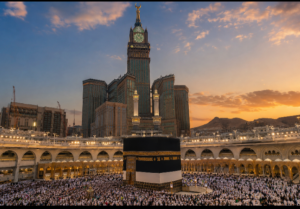
Umrah allowed anytime is a matter of Allah’s command and wisdom. The Qur’an fixes Hajj to well-known months and set days. It sets no calendar limit on Umrah. Hajj also needs huge, location-based rites that only work on exact dates.
Reviewed for accuracy against authentic sources.
Many Muslims ask about Umrah allowed anytime when they plan a trip to Makkah. Both pilgrimages center on the Kaaba, yet their timing rules differ sharply. So why did Allah (SWT) set them apart?
This guide explains the answer from the Qur’an and authentic Hadith. You will also see the practical wisdom, the points where scholars differ, and a clear side-by-side table.
Why Is Umrah Allowed Anytime? The Short Answer
Three reasons explain why Umrah allowed anytime differs from fixed Hajj. First, Allah (SWT) appointed fixed months and days for Hajj in the Qur’an. Second, Hajj rites happen at set places on set dates. Third, the Prophet (PBUH) practiced Umrah at different times, but he performed Hajj only on its appointed days.
| Feature | Hajj | Umrah |
|---|---|---|
| Timing | Fixed days of Dhul Hijjah | Any time of the year |
| Duration | About five to six days | Usually a few hours |
| Key rite | Standing at Arafat | Tawaf and Sa’i |
| Locations | Makkah, Mina, Arafat, Muzdalifah | Masjid al-Haram only |
Understanding the Basic Distinction Between Hajj and Umrah
Hajj and Umrah hold different spiritual statuses. Our guide to the importance of performing Umrah covers its virtues in detail. Here, we focus on how they differ in status and timing.
- The nature of Hajj: It is one of the Five Pillars of Islam. It is obligatory once in a lifetime for those who are physically and financially able.
- The nature of Umrah: It is a shorter pilgrimage of Ihram, Tawaf, Sa’i, and a trim.
- Their core difference: Hajj has time-bound and place-bound rites that cannot move to another date.
Scholars differ on the exact ruling of Umrah. For example, the Hanafi and Maliki schools call it a confirmed Sunnah. On the other hand, the Shafi’i and Hanbali schools say it is obligatory once in a lifetime. All schools agree that it is highly rewarding.
The Quranic Command Behind Hajj Timing
Above all, the fixed timing rests on Allah’s own command. Human convenience did not decide the timing of Hajj. Allah (SWT) says:
“Hajj is during well-known months.” (Qur’an 2:197)
Most scholars say these months are Shawwal, Dhul Qa’dah, and the first part of Dhul Hijjah. However, the core rites take place only between the 8th and 13th of Dhul Hijjah.
Additionally, Allah (SWT) points to specific counted days for remembrance:
“And remember Allah during appointed numbered days.” (Qur’an 2:203)
Because Allah (SWT) set these dates, no human authority can shift them. In contrast, the Qur’an places no monthly limit on Umrah. Therefore, believers can visit the House of Allah whenever they are able.
Guidance From Authentic Hadith
The Sunnah of the Prophet (PBUH) shows exactly how these two acts work in practice. Three reports help us understand the timing.
Hajj Is Arafah
The Prophet (PBUH) said, “Hajj is Arafah.” Whoever reaches Arafah before dawn on Muzdalifah’s night has completed his Hajj. Scholars have graded this report as authentic (Sunan Abi Dawud: 1949; Sunan at-Tirmidhi: 889).
This Hadith shows that standing at Arafat on the 9th of Dhul Hijjah is the heart of Hajj. If a pilgrim misses it, the Hajj of that year is not valid. Hence, nobody can move Hajj to another date.
The Prophet’s Umrahs
Anas (RA) reported that the Prophet (PBUH) performed four Umrahs. All were in Dhul Qa’dah, except the one he performed with his Hajj (Sahih al-Bukhari: 1780). So, his Umrahs followed no single month, and they did not wait for a special day.
Before Islam, people thought Umrah in the Hajj months was a grave sin. Islam removed that belief, and the Prophet (PBUH) allowed it (Sahih al-Bukhari: 1564).
Umrah in Ramadan
The Prophet (PBUH) said that Umrah in Ramadan is equal in reward to Hajj (Sahih al-Bukhari: 1782; Sahih Muslim: 1256). Scholars explain that this is a matter of reward only. It does not replace the Hajj that Allah (SWT) made obligatory.
Locations and Rites: A Practical Difference
The rites tied to specific places mark the biggest procedural gap. Umrah stays inside Masjid al-Haram. In contrast, Hajj moves across several sacred sites on exact dates.
| Date (Dhul Hijjah) | Hajj Rite and Location |
|---|---|
| 8th | Enter Ihram, travel to Mina, and stay there |
| 9th | Stand at Arafat, the core pillar of Hajj |
| Night of 9th | Stay at Muzdalifah and collect pebbles |
| 10th | Stone Jamrat al-Aqabah, offer a sacrifice, trim or shave, and perform Tawaf al-Ifadah |
| 11th to 12th (or 13th) | Stone the three Jamarat in Mina |
Umrah, by contrast, has only four steps. A pilgrim wears Ihram and circles the Kaaba. Then comes Sa’i between Safa and Marwah, followed by a trim or shave. You can read each step in our guide on how to perform Umrah step by step.
Because Hajj needs presence at several places on exact dates, it cannot happen outside its time. Umrah, however, has no such condition, so Umrah allowed anytime remains the rule.
The Talbiyah of Both Pilgrimages
Both Hajj and Umrah begin with the same call. Pilgrims recite it after entering Ihram, and they repeat it on the way (Sahih al-Bukhari: 1549; Sahih Muslim: 1184). An Umrah pilgrim stops when starting Tawaf, while a Hajj pilgrim stops when stoning Jamrat al-Aqabah on the 10th.
لَبَّيْكَ اللَّهُمَّ لَبَّيْكَ، لَبَّيْكَ لَا شَرِيكَ لَكَ لَبَّيْكَ، إِنَّ الْحَمْدَ وَالنِّعْمَةَ لَكَ وَالْمُلْكَ، لَا شَرِيكَ لَكَ
Labbayk Allahumma labbayk. La sharika laka labbayk. Innal-hamda wan-ni’mata laka wal-mulk. La sharika lak.
“Here I am, O Allah, here I am. You have no partner, here I am. Indeed, all praise, favor, and sovereignty belong to You. You have no partner.”
The Wisdom Behind the Fixed Dates of Hajj
Scholars have also reflected on the deeper wisdom. Allah (SWT) knows best, yet these reflections help us appreciate the design.
- Unity and equality: For example, kings and commoners stand side by side in simple white Ihram clothing. Together, they proclaim the Talbiyah.
- A shared gathering: If Hajj stayed open all year, people would visit alone at their convenience. As a result, the scene of global brotherhood would fade.
- Discipline: Likewise, a fixed date trains believers to plan, save, and prepare for years.
By keeping Umrah open, Allah (SWT) also provides a constant door for repentance and renewal. So, believers can return to His House whenever their hearts long for it.
Practical Realities: Crowds, Space, and Safety
Today, close to two million pilgrims gather for Hajj each year. They fill Makkah, Mina, Arafat, and Muzdalifah at the same time. As a result, managing the crowd takes huge planning.
- Space limits: The plains of Mina and Arafat have fixed boundaries.
- Safety systems: Also, crowd control, medical care, housing, and transport all need careful coordination.
- Seasonal operations: Running these large camps all year would be impractical for local authorities.
Because Umrah rites happen inside Masjid al-Haram, the rule of Umrah allowed anytime works well. As a result, authorities can welcome visitors every day of the year.
Is Umrah Allowed During the Days of Hajj?
Umrah is valid in all months. Even so, some scholars discourage it on the 9th to 13th of Dhul Hijjah. The Hanafi school, for instance, holds it as disliked on those five days.
In practice, Saudi authorities also limit Umrah during the Hajj season. Therefore, check the official Nusuk rules before you plan a trip near that time. Our guide on the best time to perform Umrah shows the calmest seasons.
Common Misunderstandings About Hajj and Umrah Timing
Several myths surround this topic. Clearing them up helps you plan with confidence.
- Myth: Umrah can replace Hajj. In reality, Umrah never cancels the duty of Hajj, even if you perform it in Ramadan.
- Myth: Umrah allowed anytime means no preparation. However, you still need Ihram, valid booking, and correct knowledge of the rites.
- Myth: Hajj can be done in any month. Instead, its core rites are tied to specific days of Dhul Hijjah.
- Myth: Umrah in Hajj months is sinful. This was a pre-Islamic belief, and Islam removed it (Sahih al-Bukhari: 1564).
How to Plan Your Umrah Around the Calendar
Umrah allowed anytime gives you wide freedom, yet seasons still shape your experience. Each period has its own crowd level, weather, and cost.
- Ramadan: Offers a great reward, but it is also the most crowded time.
- School holidays: Expect high prices and busy mataf areas.
- Winter months: The weather is milder, and the Haram is usually calmer.
- Near Hajj season: Rules and permits can change, so check the official guidance early.
Plan early, book through licensed operators, and keep your documents ready. In addition, learn the rites beforehand, since Umrah allowed anytime should never mean careless worship.
Lessons Believers Can Take
This topic teaches us three lessons. First, Allah (SWT) combines mercy with order. Next, He gives us open doors for repentance, and fixed moments for unity.
Finally, true worship follows His instructions, not our preferences. We perform each rite as the Prophet (PBUH) taught it. Therefore, we trust that every command carries wisdom, even when we do not see it at once.
So, treat Umrah allowed anytime as a gift. Visit when you can, and prepare for Hajj with sincerity.
Summary Comparison: Hajj vs. Umrah
| Feature | Hajj | Umrah |
|---|---|---|
| Islamic status | Obligatory once for those able | Sunnah or obligatory once, by school |
| Timing | Fixed days of Dhul Hijjah | Any time, but discouraged on 9th to 13th Dhul Hijjah by some scholars |
| Duration | Five to six days | A few hours |
| Core rites | Ihram, Arafat, Muzdalifah, stoning, sacrifice, Tawaf, and Sa’i | Ihram, Tawaf, Sa’i, and trimming |
| Standing at Arafat | The essential pillar | Not part of Umrah |
Frequently Asked Questions (FAQ)
Can Umrah Be Performed 365 Days a Year?
Answer: Yes, it is valid in every month. Some scholars, however, discourage it on the five days of Hajj. Authorities may also restrict it then.
Does Umrah Fulfill the Obligation of Hajj?
Answer: No. Umrah does not replace the Hajj that Allah (SWT) made obligatory on those who are able.
Why Is Umrah in Ramadan So Special?
Answer: The Prophet (PBUH) said that Umrah in Ramadan equals Hajj in reward (Sahih al-Bukhari: 1782). It is a matter of reward, so it does not cancel the duty of Hajj.
What Happens If a Pilgrim Misses Arafat?
Answer: The Hajj of that year is not valid. The pilgrim must follow scholarly guidance, which usually includes completing the rites as Umrah and repeating Hajj later.
Can I Perform Umrah More Than Once?
Answer: Yes. Many Muslims perform Umrah repeatedly. However, scholars advise caring for the crowds and avoiding any harm to others.
Which Is Better: Hajj or Umrah?
Answer: Hajj is a pillar of Islam and holds the higher status. Still, Umrah is also a beautiful act of worship, so do both when you can.
Final Thoughts
The principle of Umrah allowed anytime reflects Allah’s mercy and ease. Hajj, on the other hand, carries a fixed schedule that gathers the global Ummah in one place at one time. Together, they show divine wisdom, discipline, and care for the believers.
Plan your Umrah for any season, and prepare for Hajj with patience and sincere intention. Share this guide with someone who asks the same question. And Allah knows best.
References
- The Holy Qur’an: 2:197 and 2:203
- Sahih al-Bukhari: 1549, 1564, 1780, and 1782
- Sahih Muslim: 1184 and 1256
- Sunan Abi Dawud: 1949
- Sunan at-Tirmidhi: 889
Author Bio
Explore Islamic World Editorial Team
The Explore Islamic World editorial team writes each guide from the Qur’an, Sahih al-Bukhari, Sahih Muslim, and the Sunan collections. We check every Hadith number against Sunnah.com before publishing. Where scholars differ, we present each view fairly.
