





Importance of Performing Umrah: The Complete Guide to Rules, Rewards and Best Time
The importance of performing Umrah lies in its power to erase minor sins and deepen faith. It also brings a believer physically close to the House of Allah. Scholars debate whether it is obligatory or strongly recommended. Yet every school agrees the reward is immense for those who can travel.
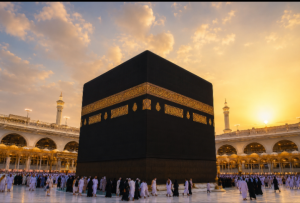
Reviewed for accuracy against authentic sources, including the Holy Quran and the Sahih Bukhari and Sahih Muslim hadith collections.
Understanding the Importance of Performing Umrah in Islam
Umrah is often called the “lesser pilgrimage” because it involves fewer rites than Hajj and carries no fixed calendar dates. A pilgrim enters the sacred state of Ihram and circles the Kaaba seven times. Then comes walking between the hills of Safa and Marwah, followed by trimming or shaving the hair.
Allah commands believers directly in the Quran: “And complete the Hajj and Umrah for Allah” (Surah Al-Baqarah, 2:196). This verse forms the scriptural foundation scholars rely on whenever they explain the importance of performing Umrah alongside Hajj.
Historically, Prophet Muhammad (PBUH) was prevented from completing Umrah in year six after the Hijrah by the Treaty of Hudaybiyyah. He returned the following year to finish it, an event now remembered as Umrat al-Qada.
The Spiritual Purpose Behind the Journey
Beyond the physical rituals, Umrah functions as an act of self-purification. Each step symbolizes stripping away status and returning to humility before Allah. This runs from packing away worldly clothing for simple Ihram garments to circling the Kaaba itself.
Many pilgrims describe a renewed sense of purpose after completing Umrah. The trip interrupts daily routines and refocuses attention on worship. Consequently, scholars encourage believers to treat the journey as a spiritual reset rather than a simple checklist.
This spiritual dimension explains the importance of performing Umrah beyond ritual completion alone. A pilgrim who prepares mentally and memorizes basic supplications enters with sincere intention, known as Ikhlas. Many report lasting behavioral change long after returning home.
The Importance of Performing Umrah: Is It Fard or Sunnah?
Islamic scholars hold slightly different opinions regarding the ruling on Umrah, although none dispute its spiritual value. The Hanafi and Maliki schools classify it as Sunnah Mu’akkadah, an emphasized practice. Prophet Muhammad (PBUH) performed it consistently but did not mandate it for every Muslim.
The Shafi’i and Hanbali schools, by contrast, treat Umrah as Fard. It becomes obligatory once in a lifetime for anyone with financial means and physical ability. Both viewpoints stem from different readings of the command “complete” in Surah Al-Baqarah, 2:196.
In practical terms, capable Muslims should not delay the journey indefinitely, regardless of which opinion they follow. Financial comfort and good health rarely remain constant, so many scholars recommend acting on the first genuine opportunity.
Umrah Requirements: The Foundation of the Importance of Performing Umrah
Islam never places a burden beyond a person’s capacity, so the requirements for Umrah stay practical rather than restrictive. The table below summarizes the three core conditions before each is explained in detail.
Scholars use the term Istita’ah, meaning capability, to describe these three conditions together. A person only becomes accountable for Umrah once Istita’ah is genuinely met, not merely assumed or planned for the future.
| Requirement | What It Means | Why It Matters |
|---|---|---|
| Financial Capability (Istita’ah) | Surplus funds after covering family needs and debts | Prevents hardship on dependents left behind |
| Physical Health | Strength to travel, stand, and walk for rituals | Tawaf and Sa’i demand sustained physical effort |
| Safety and Mahram | Secure travel route; women accompanied by a Mahram | Protects travelers and upholds Islamic guidance for women |
1. Financial Ability Comes First
Before booking a ticket, a Muslim must settle daily essentials such as food, housing, healthcare, education, and outstanding debts. Only the surplus remaining after these obligations should fund flights, visas, and accommodation in Saudi Arabia.
Scholars caution against borrowing heavily or neglecting family needs to perform Umrah. Doing so defeats the spirit of the ritual. Therefore, financial planning should begin months before the intended travel date.
Zakat obligations and existing debts take priority over Umrah expenses in Islamic law. This order protects the rights of the poor and creditors before funding an optional, once-in-a-lifetime journey.
2. Physical Health and the Option of Umrah Badal
Tawaf alone involves seven laps around the Kaaba, frequently in crowded conditions and warm weather. As a result, pilgrims need reasonable stamina, mobility, and general fitness to complete every rite safely.
Saudi health rules on mandatory vaccines, especially the meningitis ACWY vaccine, have changed more than once in recent years. Confirm current requirements with your embassy or Umrah agent a month before departure. Arriving without valid paperwork can delay entry.
Individuals who are terminally ill or permanently frail may arrange Umrah Badal. Another Muslim then performs the pilgrimage on their behalf. This provision lets the elderly and the sick still receive spiritual reward.
3. Safety and the Mahram Question for Women
Saudi Arabia officially removed the mahram requirement for women’s Umrah visas in 2022. A male guardian is no longer mandatory for entry or booking. Women can now apply independently or travel with a trusted female group through a licensed operator.
Even so, many scholars view a mahram or a verified women’s group as the safer option, not a strict rule. This distinction matters: the visa policy is a government regulation, not a change to Islamic ruling. Checking guidance from your own school of thought remains worthwhile.
Who Is Exempt From These Requirements?
Certain groups carry no obligation at all, even under the stricter Fard opinion. Children before puberty, individuals with permanent mental incapacity, and those in genuine extreme poverty are excused entirely. Guardians may still involve children voluntarily, as noted in the FAQ section below.
Visa Rules and the Importance of Performing Umrah in 2026
Booking has become more digital and more centralized than it was even a few years ago. Nusuk is the official Saudi platform for pilgrims. It now manages visas, bookings, and entry permits in one account.
Pilgrims must book their package, hotel, and transport through a Nusuk provider before a visa is issued. Travelers on an eligible tourist eVisa follow a lighter path. They arrange flights and hotels independently, then add a free Umrah permit inside the app.
The Umrah permit itself is separate from the visa. It is a timed reservation granting entry to Masjid al-Haram for Tawaf and Sa’i. Pilgrims should book it early once their account is active, since slots fill quickly. A newer one-year, multiple-entry Umrah visa allows stays of up to 90 days per visit. This helps frequent travelers skip reapplying each trip.
Step-by-Step Rituals Behind the Importance of Performing Umrah
Knowing the sequence of rites in advance prevents confusion once inside the Grand Mosque. The four core stages follow a fixed order, though timing between them varies with crowd levels.
Entering Ihram and Making the Intention
Before crossing the Miqat boundary, pilgrims bathe, wear the prescribed Ihram garments, and state their intention, or Niyyah, for Umrah. Men wear two unstitched white cloths, while women wear modest, loose clothing without a face veil during Tawaf.
The Talbiyah: What to Recite After Ihram
Transliteration: “Labbayk Allahumma labbayk. Labbayka la sharika laka labbayk. Innal-hamda wan-ni’mata laka wal-mulk, la sharika lak.”
Meaning: “Here I am, O Allah, here I am. Here I am, You have no partner, here I am. Verily all praise, grace, and sovereignty belong to You. You have no partner.”
When to recite it: Pilgrims repeat the Talbiyah continuously from the moment Ihram begins. This is especially common after prayers or when meeting fellow travelers, continuing until Tawaf starts.
Tawaf: Circling the Kaaba Seven Times
Tawaf requires walking counter-clockwise around the Kaaba seven full times, starting and ending at the Black Stone corner. Depending on crowd density, this stage typically takes between thirty and forty-five minutes to complete.
Sa’i: Walking Between Safa and Marwah
After Tawaf, pilgrims walk seven times between the hills of Safa and Marwah inside an air-conditioned corridor. This rite commemorates Hajar’s search for water and usually takes twenty to thirty minutes.
Drinking Zamzam and Making Dua
Many pilgrims pause after Tawaf to drink Zamzam water and make personal dua. This moment is widely regarded as a time when supplications are accepted. Facing the Kaaba while drinking slowly, rather than gulping quickly, allows a few unhurried minutes of reflection before Sa’i begins.
Halq or Taqsir: Completing the Rites
Umrah concludes when men shave their heads, known as Halq, or trim their hair, called Taqsir. Women instead cut a small lock of hair. Once this final step is done, the restrictions of Ihram lift immediately.
Best Time for the Importance of Performing Umrah to Multiply
Umrah can technically be performed on any day of the year, yet certain months carry rewards far beyond the rest. Understanding this timing helps travelers plan a trip that maximizes spiritual benefit without unnecessary crowding.
Ramadan: The Month of Maximum Reward
Performing Umrah during Ramadan holds the highest documented merit among all months. The Prophet Muhammad (PBUH) told a woman from the Ansar that Ramadan Umrah equals the reward of Hajj. This hadith appears in Sahih al-Bukhari 1782 and Sahih Muslim 1256.
Consequently, Ramadan Umrah packages sell out early every year, and prices climb sharply as the month approaches. Travelers planning for Ramadan should secure flights and hotel rooms several months in advance.
Dhul-Qadah: The Prophet’s Preferred Month
Historical accounts show that Prophet Muhammad (PBUH) performed most of his own Umrahs during Dhul-Qadah, the month preceding Hajj season. This timing also avoids the intense crowd density typical of Ramadan.
However, entering Ihram or performing Umrah during the main Hajj days, specifically the 9th through 13th of Dhul-Hijjah, is discouraged. Pilgrims should schedule their trip either well before or well after this narrow window.
The Importance of Performing Umrah Multiple Times in a Lifetime
There is no cap on how many times a Muslim may perform Umrah across a lifetime. Prophet Muhammad (PBUH) himself completed the pilgrimage four separate times, setting a clear precedent for repetition.
The Prophet (PBUH) also described the lasting benefit of repeat visits. One Umrah expiates the minor sins committed before the next. An accepted Hajj, he added, earns nothing less than Paradise (Sahih al-Bukhari 1773; Sahih Muslim 1349). As a result, many families return every few years whenever finances and health allow.
The Rewards Behind the Importance of Performing Umrah
Beyond expiating sins, Umrah carries social and personal rewards that often go unmentioned. Traveling as a family strengthens bonds. Shared hardship and shared worship tend to deepen relationships in ways ordinary vacations rarely achieve.
Many pilgrims also report a shift in priorities after returning home. Witnessing the diversity of the global Muslim community at the Grand Mosque often inspires simpler lifestyles. This shift in perspective is part of the importance of performing Umrah that rulings and statistics alone cannot fully capture.
Common Mistakes That Reduce the Importance of Performing Umrah
Even sincere pilgrims sometimes weaken their own experience through avoidable errors. Recognizing these mistakes beforehand helps travelers focus on worship instead of logistics once they arrive.
- Rushing through Tawaf and Sa’i without reflection, treating the rites as a race rather than an act of worship.
- Ignoring Ihram restrictions, such as using scented products or clipping nails after entering the sacred state.
- Skipping preparation for the recommended duas, which leaves pilgrims unsure what to recite at each stage.
- Overpacking heavy luggage, which makes movement between the airport, hotel, and mosque unnecessarily difficult.
- Delaying visa applications until the last minute, risking canceled bookings during peak seasons like Ramadan.
Avoiding these errors preserves the importance of performing Umrah as a focused act of worship rather than a rushed itinerary. Preparation, more than budget, often determines how meaningful the trip feels afterward.
Umrah vs Hajj: Key Differences at a Glance
Confusing the two pilgrimages is common among new Muslims and even some travel agents. Hajj takes place only during fixed days in Dhul-Hijjah. It includes standing at Arafat, staying overnight in Muzdalifah, and stoning the Jamarat, none of which appear in Umrah.
Umrah, by contrast, can be completed within hours on any day of the year. It involves only Ihram, Tawaf, Sa’i, and Halq or Taqsir. Hajj is Fard for every capable Muslim once in a lifetime, while Umrah’s ruling varies by school. Travelers should never assume completing one fulfills the other.
Practical Logistics Every Traveler Should Confirm
Beyond rulings and rewards, a few logistical details often catch first-time pilgrims off guard. Costs vary widely by season, flight origin, and hotel distance from the Haram. Ramadan trips typically cost the most due to high demand.
- Book your Nusuk-approved package or eVisa Umrah permit early, since slots fill quickly during peak months.
- Pack comfortable, seamless Ihram-compliant clothing and broken-in sandals to avoid blisters during Tawaf and Sa’i.
- Book accommodation within walking distance of Masjid al-Haram if budget allows, since it saves significant time during peak prayer hours.
- Carry a printed itinerary and hotel address in Arabic, which helps drivers and staff assist you quickly.
- Exchange some currency into Saudi Riyals before departure, since airport counters often charge higher fees.
- Save your country’s consulate address and phone number in Jeddah or Riyadh in case of an emergency.
Frequently Asked Questions
Can I perform Umrah if I have outstanding debt?
Yes, provided the lender consents or the repayment deadline is not immediate, and surplus funds remain available. Even so, clearing debts before traveling remains the preferred approach among scholars.
Can I perform Umrah on behalf of a deceased relative?
Yes, Umrah Badal is valid for a deceased family member or a living person who is permanently unable to travel. The reward reaches the person on whose behalf it is performed.
Can young children perform Umrah?
Yes, a guardian can form the intention for a child and guide them through the rites. Both the parent and the child receive spiritual reward for the act.
Does Umrah replace the obligation of Hajj?
No, Umrah and Hajj remain separate acts of worship with different rulings and timings. Completing Umrah does not fulfill the Hajj obligation for those who can afford it.
Is Umrah mandatory for women specifically?
The same scholarly rulings that apply to men apply to women, provided the Mahram and safety conditions are also met. Women are not exempt simply due to gender, though travel conditions add one extra requirement.
What is the main difference between Hajj and Umrah?
Hajj happens only during specific days in Dhul-Hijjah and includes additional rites such as standing at Arafat. Umrah has no fixed dates and involves fewer steps overall. Hajj is obligatory for capable Muslims once in a lifetime, whereas Umrah’s ruling varies by school of thought.
Can a pregnant woman perform Umrah?
Yes, provided a doctor confirms the pregnancy is stable enough for travel and standing through the rituals. Many pilgrims complete Umrah safely during pregnancy, though the third trimester often calls for extra caution and rest breaks.
Final Reflections on the Importance of Performing Umrah
The importance of performing Umrah rests on genuine capability rather than pressure or comparison with others. Muslims who meet the financial, physical, and safety conditions should set a sincere intention and plan the journey without delay. Ramadan or Dhul-Qadah offers the greatest reward for that journey.
Start by reviewing your finances, confirming visa requirements, and consulting a trusted travel agency that specializes in Umrah packages.
Author Description: This article was prepared by the Explore Islamic World editorial team, following an internal review process that cross-checks Quranic citations and hadith references against Sunnah.com and the original Sahih al-Bukhari and Sahih Muslim collections before publication.

Comments are closed.
[…] Islamic jurisprudence, Hajj and UmrahUmrah hold distinct spiritual […]
[…] Muslims confuse Hajj and Umrah, because both end at the Kaaba. Yet each pilgrimage asks for something different from you. This […]