





How to Perform Salatul Tasbih: A Complete Step-by-Step Guide
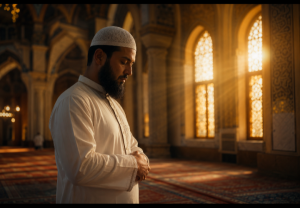
Salatul Tasbih is a special four-rak’ah Nafl prayer. In it, a Muslim recites a specific tasbih 300 times. This seeks forgiveness for every mistake, big or small, old or new. This guide shows you exactly how to perform Salatul Tasbih and count each rak’ah correctly. It also explains why the Prophet Muhammad (PBUH) recommended it so highly.
We reviewed this guide against Sunan Abu Dawud and Sunan Ibn Majah. We also checked it against mainstream Hanafi and Shafi’i scholarly guidance.
Daily life pulls people away from constant remembrance of Allah (SWT). Mistakes pile up faster than most of us notice. Salatul Tasbih exists precisely for this problem. Unlike the five obligatory prayers, it is voluntary. Yet its reward stands out: complete forgiveness of sins, old and new, hidden and open. Many Muslims have heard of this prayer but never learned the exact method. That is exactly what this guide covers.
What Is Salatul Tasbih and Why Does It Matter?
Salatul Tasbih means “the prayer of glorification.” It consists of four rak’ahs. Inside those four rak’ahs, a worshipper recites the following tasbih 300 times in total:
Arabic: سُبْحَانَ اللهِ وَالْحَمْدُ لِلَّهِ وَلاَ إِلَهَ إِلاَّ اللهُ وَاللهُ أَكْبَرُ
Transliteration: Subhanallahi wal-hamdu lillahi wa la ilaha illallahu wallahu akbar
Meaning: Glory be to Allah, all praise is due to Allah, there is no deity worthy of worship except Allah, and Allah is the Greatest.
When recited: You repeat this tasbih at seven separate points in every rak’ah. Say it right after the standard tasbih of that posture.
What sets Salatul Tasbih apart from other Nafl prayers is this repeated, structured glorification. It runs through every physical position of the prayer: standing, bowing, and prostrating. That structure also makes it easy to lose count if you rush. This is exactly why the step-by-step breakdown below matters so much.
Preparing to Pray Salatul Tasbih Correctly
Before starting, make wudu as you would for any obligatory prayer. Choose a quiet space where you can concentrate without interruption, since a noisy room makes an accurate count much harder. Silence your phone and set aside roughly 15 minutes so you don’t rush the recitations. Make the intention (niyyah) specifically for Salatul Tasbih, either silently in your heart or in your own words. Islamic prayer does not require a fixed Arabic formula for intention.
First-time reciters often find it useful to keep a small written copy of the tasbih nearby. This helps for the first few attempts. At the start, accuracy matters more than speed. Once the wording and counting pattern become familiar, most people no longer need any written reference at all.
Scholarly Views on Salatul Tasbih
Muslims across the Hanafi, Shafi’i, Maliki, and Hanbali schools widely practice Salatul Tasbih. Scholars differ slightly, though, on how strongly to recommend it. Some hadith specialists raised concerns about certain narrators in the chain reported by Ikrimah from Ibn Abbas (RA). Other scholars accepted the hadith as suitable for practice because supporting narrations back it up through separate chains. This pattern repeats across many recommended acts of worship. Scholars may debate one chain’s strength. Still, centuries of accepted precedent and corroborating reports support the practice.
In practical terms, Salatul Tasbih counts as a Mustahabb (recommended) prayer. It is not Fard (obligatory) or even confirmed Sunnah. A Muslim who never prays it commits no sin. A Muslim who does pray it earns the substantial reward the hadith describes.
Virtues of Salatul Tasbih According to Authentic Hadith
The virtue of Salatul Tasbih comes directly from a hadith. In it, the Prophet Muhammad (PBUH) taught the prayer to his uncle, Abbas ibn Abdul-Muttalib (RA), and said:
“O uncle, shall I not give you, shall I not present you, shall I not bestow upon you ten qualities… if you do this, Allah will forgive your sins, the first and the last, the old and the new, the intentional and the unintentional, the small and the great, the secret and the open.”
The Prophet (PBUH) then told Abbas (RA) to pray it daily if he could, weekly if not, monthly if that failed, yearly at minimum, and at the very least once in a lifetime. Sunan Abu Dawud (1297) and Sunan Ibn Majah (1386) record this hadith. Scholars across the major schools accept its recommendation, though a small number of hadith specialists have discussed its chain critically. Because of that, most scholars treat Salatul Tasbih as a recommended, rewarding act rather than a strictly obligatory one.
The Qur’an reinforces the underlying idea behind this prayer too. In Surah Az-Zumar (39:53), Allah (SWT) says He forgives all sins for those who turn to Him. He alone is the Most Forgiving and Most Merciful. Salatul Tasbih puts that verse into direct practice through repeated, deliberate glorification.
Spiritual Benefits of Salatul Tasbih Beyond Forgiveness
Forgiveness is the headline reward of Salatul Tasbih, but the prayer offers more than that single benefit. Repeating “Subhanallah, Alhamdulillah, La ilaha illallah, Allahu Akbar” 300 times in one sitting trains the tongue and the heart together. Your mind cannot easily wander while you actively count a specific phrase through every posture of the prayer. Many worshippers describe a noticeable calm after finishing it, similar to a longer dhikr session compressed into one structured prayer.
The prayer also packs four core statements of faith into one breath. These are Allah’s transcendence (Tasbih) and gratitude toward Him (Tahmid). They also include the oneness of His worship (Tahlil) and His supreme greatness (Takbir). Reciting these four declarations 300 times in one sitting compresses the entire foundation of Tawheed into a single prayer. That is part of why classical scholars valued it so highly despite its voluntary status.
Salatul Tasbih Step-by-Step: Quick Reference Table
| Step | Position | Tasbih Count |
|---|---|---|
| 1 | Standing (after Surah recitation, before Ruku) | 15 |
| 2 | In Ruku (after the usual Ruku tasbih) | 10 |
| 3 | Rising from Ruku (Qawmah) | 10 |
| 4 | First Sujud (after the usual Sujud tasbih) | 10 |
| 5 | Sitting between the two Sujuds | 10 |
| 6 | Second Sujud | 10 |
| 7 | Sitting after the second Sujud | 10 |
| Total per rak’ah | 75 | |
| Total across 4 rak’ahs | 300 | |
How to Perform Salatul Tasbih in Each Rak’ah (Full Method)
Performing Salatul Tasbih takes roughly 10 to 15 minutes at a normal, unhurried pace. That’s slightly longer than a typical four-rak’ah prayer because of the added counting. Start with the intention (niyyah) for Salatul Tasbih, then follow these seven points in every rak’ah.
1. While Standing (15 Times)
Recite Sana, Surah Al-Fatiha, and any additional surah of your choice. Then recite the tasbih 15 times before moving into Ruku. No specific surah is required; any surah you recite regularly works well here.
2. In Ruku (10 Times)
Say the normal Ruku tasbih, “Subhana Rabbiyal Azeem,” three times as usual. Then recite the Salatul Tasbih glorification 10 more times while still bowed in Ruku.
3. Rising From Ruku (10 Times)
Say “Sami Allahu liman hamidah, Rabbana lakal hamd” as you rise. While still standing upright before Sujud, recite the tasbih 10 times.
4. First Sujud (10 Times)
Recite the usual Sujud tasbih, “Subhana Rabbiyal Ala,” three times. Then continue with the Salatul Tasbih glorification 10 more times while still in prostration.
5. Sitting Between the Two Sujuds (10 Times)
Sit upright between the two prostrations as you normally would. Then recite the tasbih 10 times before returning to the second Sujud.
6. Second Sujud (10 Times)
Repeat the same pattern as the first prostration: the usual tasbih three times, then 10 recitations of the Salatul Tasbih glorification.
7. Sitting After the Second Sujud (10 Times)
Before standing for the next rak’ah, or before Tashahhud in the final rak’ah, pause briefly. Then recite the tasbih 10 more times. This brings the rak’ah total to 75, and the four-rak’ah total to exactly 300.
After the fourth rak’ah, finish with Tashahhud, Durood, and Salam exactly as you would in any other prayer. Salatul Tasbih needs no special closing supplication. Still, many worshippers spend a few extra minutes in personal dua right afterward. Tradition treats this as a favorable moment for supplication.
Salatul Tasbih Compared to Other Nafl Prayers
Tahajjud, Ishraq, and Salatul Tasbih are all Nafl prayers, but they serve different purposes. Tahajjud falls in the last third of the night. It focuses on closeness to Allah (SWT) and personal supplication, with no fixed recitation count attached. A specific hadith ties Ishraq to sitting in remembrance shortly after Fajr, once the sun has risen. Salatul Tasbih stands apart because it builds entirely around a fixed, countable glorification repeated 300 times. That makes it far more structured than most other voluntary prayers. That structure is exactly why the step-by-step count matters so much here. Open-ended Nafl prayers, by contrast, let you choose the recitation length yourself.
Common Mistakes to Avoid When Praying Salatul Tasbih
Most people who struggle with Salatul Tasbih run into the same handful of problems. Watch for these:
- Losing count under pressure. Use finger counting or a simple mental tally instead of trying to recite quickly from memory alone.
- Reciting aloud. Say the tasbih silently or quietly, never in a loud voice that disturbs others praying nearby.
- Skipping a missed count entirely. If you forget the tasbih in one position, make it up in the very next position. Don’t abandon the count for that rak’ah.
- Praying during Makruh times. Avoid sunrise, exact noon, and sunset, the same restricted windows that apply to other Nafl prayers.
- Treating it as obligatory. Salatul Tasbih is Sunnah/Nafl, not Fard, so missing it carries no sin, though performing it brings substantial reward.
Best Time and Practical Tips for Salatul Tasbih
Outside the Makruh windows, you can pray Salatul Tasbih at any hour of the day or night. Many people find that praying it late at night, after Isha or in the last third of the night, brings noticeably better focus. Fewer distractions compete for attention at that hour. Praying it alone rather than in congregation also matches the Sunnah practice. This is a personal Nafl prayer, not a communal one.
If counting feels difficult at first, try a set of prayer beads (misbaha). Or simply count on the joints of your fingers until the rhythm becomes familiar. Most people find the counting pattern becomes second nature after two or three attempts.
Who Should Pray Salatul Tasbih?
Salatul Tasbih welcomes any Muslim, male or female, who has reached the age of religious accountability. Menstruation, which pauses regular prayer obligations, applies here too. The prayer suits several kinds of people. Someone seeking forgiveness after a period of neglecting their prayers can benefit from it. So can someone preparing for a major life event such as Hajj, or simply anyone wanting to strengthen their bond with Allah (SWT) beyond the five daily prayers. No special age limit applies beyond the general conditions for valid prayer. No extra purity requirement exists either, beyond what any normal prayer already demands, such as wudu and facing the Qiblah.
Because it carries no obligation, missing it carries no sin either. That is precisely why the Prophet (PBUH) framed it in decreasing frequency for Abbas (RA). Daily is ideal, but even a single lifetime performance still earns the full forgiveness the hadith promises.
Frequently Asked Questions
Can Salatul Tasbih be prayed in congregation?
No. As a Nafl prayer, you should pray it individually rather than in Jamaat.
Are specific surahs required for Salatul Tasbih?
No. You can recite any surah after Surah Al-Fatiha; none is mandatory for this prayer.
Is Salatul Tasbih different for men and women?
No. The method, tasbih count, and virtues stay identical for both men and women.
What happens if I lose count partway through?
Make up the missed repetitions in the following position instead of restarting the entire rak’ah.
Can I split the four rak’ahs into two separate sittings?
It’s better to complete all four rak’ahs together, since tradition treats the prayer as one connected unit. Still, you can pray two rak’ahs at a time with a fresh intention if needed.
How many times is “Subhanallah” said in total during Salatul Tasbih?
You repeat the full tasbih phrase, not just the word “Subhanallah” alone. It totals 300 times across the four rak’ahs, 75 times per rak’ah.
Is it necessary to pray Salatul Tasbih in Arabic only?
Recite the 300-count tasbih in its original Arabic wording, the same as any fixed prayer text. Understanding its meaning in your own language still helps deepen your concentration.
Can Salatul Tasbih replace one of the five daily obligatory prayers?
No. Salatul Tasbih stands entirely separate from and additional to the five daily Fard prayers. It cannot substitute for any of them.
Final Thoughts
Sins accumulate quietly, but so does Allah’s mercy for anyone willing to ask for it sincerely. Salatul Tasbih offers a rare, concentrated path to that forgiveness. It’s structured so precisely that even a first-time reader can follow it correctly. Whether you manage it daily, monthly, or only once in your life, praying Salatul Tasbih with sincerity fulfills exactly what the Prophet (PBUH) asked of his uncle Abbas (RA). It fulfills what he intended for the entire Ummah too.
Author Bio: Explore Islamic World Editorial Team. We review our articles against authentic Hadith collections, including Sahih Bukhari, Sahih Muslim, Sunan Abu Dawud, and Sunan Ibn Majah. We cross-check every reference with Sunnah.com before publication.

Comments are closed.
[…] the KiswaKiswa or touching the Kaaba in a dream means you will gain honor, knowledge, or great benefit through […]
[…] routine? Explore our step-by-step guide to the Witr prayer, or read about the healing power of Salatul Tasbih next — and share this guide with someone who needs a reason to wake up […]