





Halal Food While Traveling: A Complete Guide to Meals and Prayer Spaces
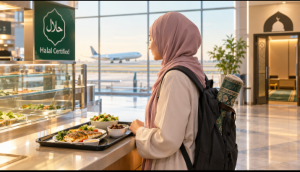
Halal food while traveling comes down to three steps: research early, verify certification, and ask about ingredients. For prayer, locate a mosque or multi-faith room, carry a compact mat, and check a qibla app. Planning ahead removes most of the stress, and this guide shows you exactly how.
Reviewed for accuracy against authentic sources.
| Step | Name | Meaning/Purpose |
|---|---|---|
| 1 | Research | Map halal restaurants, grocery stores, and mosques before you leave. |
| 2 | Pack | Bring a prayer mat, a wudu bottle, and safe snacks. |
| 3 | Verify | Check certificates and ask direct questions about ingredients. |
| 4 | Fall back | Choose lawful basics like fruit, rice, and fish when options run thin. |
| 5 | Locate | Find mosques, airport prayer rooms, and clean spaces for Salah. |
| 6 | Pray | Shorten, combine, or adapt prayers within the rulings of your school. |
Why Halal Food While Traveling Needs a Plan
Eating well on the road is an act of worship, not an afterthought. Allah (SWT) tells believers to eat what is lawful and good (Surah Al-Baqarah, 2:168). However, a new country brings unfamiliar labels, unknown kitchens, and hidden ingredients. Therefore, a simple plan protects both your meals and your peace of mind.
The Prophet (PBUH) taught that halal and haram are both clear. Doubtful matters lie between them (Sahih al-Bukhari, Hadith 52). He also advised leaving what makes you doubt (Jami at-Tirmidhi, Hadith 2518). Consequently, travelers should aim for certainty wherever possible.
Your food shapes your duas, too. The Prophet (PBUH) described a dusty, tired traveler who raises his hands in dua. Yet his food and drink come from haram. How could he expect an answer (Sahih Muslim, Hadith 1015)? That warning makes halal food while traveling a matter of the heart as well as the stomach.
Halal Rules Every Traveler Should Know
Four problem areas complicate halal food while traveling. First, Islam forbids pork and all its derivatives (Surah Al-Baqarah, 2:173). Second, it forbids blood, carrion, and meat offered to anyone besides Allah (SWT). Third, intoxicants such as alcohol are haram (Surah Al-Ma’idah, 5:90). Finally, hidden ingredients can turn a safe dish into a doubtful one.
Watch for these common hidden items:
- Lard and bacon fat appear in some pastries and stock cubes.
- Wine, mirin, and vanilla extract show up in sauces and desserts.
- Gelatin hides in candies, yogurts, and capsules.
- Animal rennet sits inside certain cheeses.
Where Scholars Differ on Modern Food
Seafood is a good example. Most scholars treat fish as lawful, based on Surah Al-Ma’idah, 5:96. However, schools differ on other sea creatures, such as shellfish. Therefore, follow the guidance of your own school.
Meat from Jews and Christians is another example. Surah Al-Ma’idah, 5:5 allows believers to eat the food of the People of the Book. Some scholars apply this to meat today. Others advise caution, because modern slaughter methods vary. Likewise, gelatin and rennet draw different rulings. Therefore, ask a trusted scholar about any gray area.
Step 1: Plan Your Meals Before You Leave
Good research for halal food while traveling takes about an hour and saves days of stress. First, check how easy halal dining is in your destination. Some cities, such as Istanbul and Kuala Lumpur, make it simple. Smaller towns, however, often need more planning.
Next, build a short list of halal restaurants and grocery stores near your hotel. Apps such as Zabihah, HalalTrip, and Muslim Pro list halal eateries and mosques in many cities. Google Maps also helps, so search for “halal restaurant” and read recent reviews. Reviews often reveal whether a place truly holds a valid certificate.
Then contact your hotel. Ask whether the kitchen offers halal or pork-free meals. Also request a mini-fridge and the direction of the qibla. These small requests make halal food while traveling far easier from the first night.
Flying adds one more step to halal food while traveling. Airlines usually offer a Muslim meal (code MOML) when you request it ahead of time. Most carriers want 24 to 48 hours of notice. However, standards differ between airlines, so a vegetarian meal can be a safer backup if you doubt the source.
Step 2: Verify Halal Status on Arrival
A sign reading “halal” proves very little on its own. First, ask to see a current certificate, and note the certifying body. Widely recognized bodies include IFANCA in the United States and HMC in the United Kingdom. JAKIM in Malaysia and MUI in Indonesia also carry weight. Additionally, check that the certificate has not expired.
Therefore, if no certificate exists, speak with the owner directly. Muslim-owned restaurants usually care about halal standards, yet you should still ask. Use these questions:
- Is the meat zabiha, or only “halal-style”?
- Where does the supplier source the meat?
- Does any dish contain alcohol, wine, or pork stock?
- Do you use separate grills, oil, and utensils for pork?
- Are the desserts made with gelatin?
Watch for red flags too, since they decide whether halal food while traveling is truly safe. Shared fryers, shared grills, and wine-based sauces cause the most common problems. As a result, a kitchen that cooks pork and “halal chicken” on one grill deserves a second look.
Safe Fallback Meals When Halal Options Are Scarce
Sometimes no halal restaurant sits within reach. In that case, choose foods that are lawful by nature. Fresh fruit, vegetables, bread, rice, eggs, and plain milk rarely raise concerns. Fish is the usual next choice, since most scholars treat it as lawful.
The Prophet (PBUH) spoke about the sea directly. He said its water is pure and its dead are lawful (Sunan Abu Dawud, Hadith 83). Therefore, a plain grilled fish with salad can rescue a tough travel day.
Strict necessity changes the ruling. The Qur’an lifts the sin from anyone compelled to eat a forbidden item. However, he must neither desire it nor exceed the need (Surah Al-Baqarah, 2:173). Inconvenience, though, is not necessity. Therefore, ask a qualified scholar before relying on this exception. As a result, these fallbacks keep halal food while traveling realistic even in remote places.
How to Find Prayer Spaces Anywhere in the World
A mosque is the best option, but it is not the only one. Search for “mosque” or “masjid” on Google Maps, then confirm the opening hours. Prayer apps such as Muslim Pro also show nearby mosques and calculated prayer times. As a result, you can plan each day around Salah.
Many everyday places also offer a quiet corner:
- Airports often provide a prayer room or multi-faith chapel; ask at the information desk.
- Universities usually have a prayer room run by a Muslim student association.
- Large hospitals and shopping malls sometimes keep a quiet room for worship.
- Hotels can supply a prayer mat and confirm the qibla on request.
Prophet Muhammad (PBUH) said the earth is a mosque, except graveyards and bathrooms (Sunan Abu Dawud, Hadith 492). Therefore, a clean park corner, a quiet hotel room, or a rest-stop lawn can all work. Clean ground, a mat, and the correct qibla are enough.
Praying in Airports, on Planes, and on the Road
Travel also changes how you pray. Allah (SWT) permits shortening the prayer during travel (Surah An-Nisa, 4:101). Most scholars apply this to the four-rak’ah prayers, so Dhuhr, Asr, and Isha become two rak’ahs. Distance matters too, and scholars commonly set it near 80 kilometers, or about 50 miles.
Many scholars also allow travelers to combine Dhuhr with Asr and Maghrib with Isha when needed. However, schools differ on the details. Therefore, confirm the ruling with a scholar from your own school before your trip.
Water can become a problem on the road. If you cannot find clean water, the Qur’an permits tayammum, or dry ablution, with clean earth (Surah Al-Ma’idah, 5:6). Allah (SWT) gave the Prophet (PBUH) the earth as a place of prayer and purification (Sahih al-Bukhari, Hadith 335). A small wudu bottle in your bag still makes life easier.
First, check prayer times before boarding a plane. If landing happens before the time ends, many scholars advise waiting for solid ground. Otherwise, pray in your seat, standing if you can and sitting if you cannot. Also, face the qibla as best you can, and use an app to estimate the direction. Finally, ask a scholar about long flights near sunrise or sunset.
Essential Duas for Travel and Meals
Dua When Boarding a Vehicle or Plane
First, say this supplication as you settle into your seat. It comes from the Qur’an (Surah Az-Zukhruf, 43:13-14) and appears in a hadith about travel (Sahih Muslim, Hadith 1342).
سُبْحَانَ الَّذِي سَخَّرَ لَنَا هَذَا وَمَا كُنَّا لَهُ مُقْرِنِينَ وَإِنَّا إِلَى رَبِّنَا لَمُنْقَلِبُونَ
Subhana alladhi sakhkhara lana hadha wa ma kunna lahu muqrinin, wa inna ila rabbina lamunqalibun.
“Glory be to Him who made this vehicle serve us, though we could never have controlled it. Indeed, to our Lord we will return.”
When to recite: At the start of any trip, after boarding a car, train, bus, or plane. The Prophet (PBUH) said “Allahu Akbar” three times first, then recited this dua.
Dua for Forgetting Bismillah
The Prophet (PBUH) taught a boy three eating manners (Sahih al-Bukhari, Hadith 5376). He told him to say Bismillah, eat with the right hand, and eat from the nearest side. However, travelers often start eating without thinking. In that case, use the following dua once you remember.
بِسْمِ اللَّهِ أَوَّلَهُ وَآخِرَهُ
Bismillahi awwalahu wa akhirahu.
“In the name of Allah, at its beginning and at its end.”
When to recite: Midway through a meal, if you forgot to say Bismillah at the start (Sunan Abu Dawud, Hadith 3767).
Packing Checklist for Halal Meals and Salah
Pack these items to make halal food while traveling and Salah easier:
- Bring a compact, foldable prayer mat.
- Pack a small bottle for wudu.
- Download a qibla and prayer-time app with offline mode.
- Dates, nuts, and dried fruit for emergencies.
- Snacks with labels checked for gelatin and alcohol.
- Save a list of halal certifying bodies for your destination.
Common Mistakes Travelers Make
However, a few habits make halal food while traveling harder than necessary:
- Trusting the word “halal” without checking a certificate or asking questions.
- Skipping Salah because the schedule feels tight.
- Overlooking wine, gelatin, and lard in sauces and desserts.
- Waiting until hunger strikes before searching for food.
- Assuming every vegetarian dish is halal.
Frequently Asked Questions
Is vegetarian food always halal?
Not always. Vegetarian dishes can contain wine, vanilla extract, gelatin, or animal rennet. Therefore, read labels and ask about sauces and cheese.
Can I eat fish at a non-halal restaurant?
Many scholars allow it if the kitchen cooks the fish apart from haram items. However, some scholars prefer avoiding such places. Ask about shared fryers and oil, then follow your scholar.
Is kosher meat halal?
Not automatically. Some scholars permit it under Surah Al-Ma’idah, 5:5. Others disagree because of modern slaughter methods. Therefore, consult a trusted scholar.
Can I pray on a plane?
Yes, when you cannot land before the prayer time ends. Then face the qibla as best you can. Pray seated if standing is difficult.
How do I find prayer rooms in airports?
Check the airport map or website first. Then ask the information desk. Many large airports list a prayer room or multi-faith chapel.
Travel With Confidence and Keep Your Faith First
Good planning turns a stressful trip into a calm one. Research your destination, verify every meal, and keep your prayer tools within reach. Together, these habits make halal food while traveling a normal part of your day.
Share this guide with a friend who plans to travel soon. Then bookmark it for your next flight, because halal food while traveling gets easier with practice. Which tip helped you most? Leave a comment below, and may Allah (SWT) make every trip easy for you.
Author Description/Bio:
Written by the Explore Islamic World editorial team. Every Qur’an verse and hadith in this guide comes from named sources such as Sahih al-Bukhari, Sahih Muslim, Sunan Abu Dawud, Jami at-Tirmidhi, and Sunnah.com. Where scholars differ on gelatin, kosher meat, or combining prayers, the guide says so and points readers to their own school.

Comments are closed.
[…] Check labels, since some products use other additives you may want to avoid. […]