





Can You Fast in the Second Half of Shaban? Clearing Up Common Pre-Ramadan Misconceptions
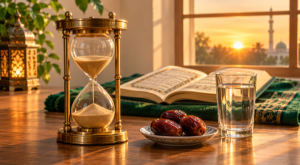
Yes, you can fast in the second half of Shaban in most cases. A disputed hadith discourages new voluntary fasts after the 15th. Most scholars still permit them, and everyone allows make-up, habitual, and vowed fasts. Avoid starting a new fast on the last day or two.
Reviewed for accuracy against authentic sources.
| Your Situation | Can You Fast? | Reason |
|---|---|---|
| Making up missed Ramadan days | Yes | It is an obligation, so every scholar allows it |
| Following a regular habit, such as Mondays and Thursdays | Yes | Habitual fasts are an agreed exception |
| Fulfilling a vow or an expiation | Yes | These fasts are owed to Allah |
| Continuing a fast streak that began before the 15th | Yes | The Prophet fasted most of Shaban |
| Starting a brand-new voluntary fast after the 15th | Scholars differ | Most allow it, and some discourage it |
| Starting a new fast on the last day or two | Avoid it | The Prophet forbade rushing into Ramadan |
Ramadan is near, and the questions multiply. One friend says you must stop fasting after the 15th. Another says the Prophet (PBUH) fasted nearly the whole month. Both sound confident, yet they cannot both be right.
This guide settles the confusion about the second half of Shaban with evidence. You will see the authentic texts, the scholarly positions, and a clear plan for the weeks ahead. By the end, you will know exactly when you may fast and when you should wait.
Where the Confusion Comes From
Two kinds of reports exist, and they seem to point in opposite directions. One discourages fasting once Shaban is half over. The other shows the Prophet (PBUH) fasting almost all of the month.
People usually hear only one of them. A short social media post quotes the first report and stops. Another quotes the second and ignores the first. As a result, each side believes the other is ignoring the Sunnah.
Scholars have studied both reports on the second half of Shaban for centuries. Their conclusions are more balanced than the posts suggest. Therefore, a calm look at each report solves most of the confusion.
Why Shaban Deserves Your Attention
Before the rulings, remember why this month matters at all. Usama ibn Zayd (RA) once asked the Prophet (PBUH) why he fasted so much in Shaban. The Prophet answered that people neglect it, as it falls between Rajab and Ramadan. Sunan an-Nasa’i 2357 records this.
He added that it is a month when deeds are raised to the Lord of the worlds. Also, he loved that his deeds be raised while he was fasting. Because of this, many believers treat the whole month as a training ground for Ramadan.
Therefore, the question is not whether Shaban is special. Rather, the issue is how to honor the second half of Shaban without breaking any limit. This guide answers that question step by step.
The Direct Answer on the Second Half of Shaban
The short answer is yes, with a few clear limits. Most scholars allow fasting in the second half of Shaban, and nobody forbids certain fasts. The strictest view concerns only new voluntary fasts with no connection to a habit.
Here is the practical summary. If you already fast regularly, keep going. Likewise, if you owe make-up days from last Ramadan, fast them now. A vow also stays valid, so fulfill it.
Only one case remains open. That case is a brand-new voluntary fast, started after the 15th, by someone with no habit. Scholars differ on it, and the sections below explain why.
The Hadith That Discourages Fasting
Abu Hurayrah (RA) reported a short statement from the Prophet (PBUH). He said, “When Shaban is half over, do not fast.” Jami at-Tirmidhi 738 and Sunan Abi Dawud 2337 record it.
Scholars grade this narration differently. Some, such as Ibn Hibban and al-Albani, graded it sound. Others, including Ahmad ibn Hanbal and Ibn Ma’in, reportedly weakened it. The disagreement comes from doubts about one narrator.
That grading difference explains the whole debate over the second half of Shaban. Scholars who accept the report apply it as a rule. In contrast, those who reject it rely on other texts instead.
What the Wording Actually Says
The text says “do not fast” without naming a reason. For this reason, scholars look at the wider evidence to understand its scope. They ask whether it bans every fast or only a certain kind.
Many conclude that it targets a person who begins fasting in the second half of Shaban without any cause. It does not target someone who is already fasting. Hence, the report is narrower than a quick reading suggests.
The Hadith That Shows the Prophet Fasting Through Shaban
Umm Salama (RA) said she never saw the Prophet (PBUH) fast two months in a row except Shaban and Ramadan. Jami at-Tirmidhi 736 and Sunan Abi Dawud 2336 record this.
Aisha (RA) said she never saw him fast more in any month than in Shaban. Sahih al-Bukhari 1969 and Sahih Muslim 1156 record this. In one wording, he fasted nearly all of the month.
These reports are strong. They show that the Prophet (PBUH) fasted well into the second half of the month. So a blanket ban on fasting after the 15th does not match his own practice.
How Scholars Reconcile Them
Scholars of the four schools reached three practical positions. The table below shows each one briefly.
| Position | Held By | Core Reasoning |
|---|---|---|
| New voluntary fasts are prohibited, with exceptions | Many Shafi’i scholars | They accept the hadith, so they restrict new fasts after the 15th |
| Fasting is permitted throughout the month | Many Hanafi, Maliki, and Hanbali scholars | They weaken the hadith or limit its meaning |
| The hadith discourages new fasts but does not forbid them | Some scholars of every school | They read it as gentle advice to save energy |
Why the Exceptions Matter
Even scholars who accept the hadith allow certain fasts. They allow a fast that continues from before the 15th. Regular habits, make-up days, and vows also remain open.
Therefore, nearly everyone who fasts in Shaban for a good reason stays inside the rule. The restricted case is narrow and rare.
The Wisdom of Saving Strength
Some scholars explain the discouragement as protection. A person who fasts every day until Ramadan may enter the month exhausted. Resting a few days beforehand helps the body for the longer fast ahead.
This reading fits the Prophet’s own balance. He taught that your body has a right over you. Sahih al-Bukhari 1968 records that teaching.
Who May Fast Without Any Doubt
You may fast in every view if one of these applies to you.
- You owe Ramadan days. Aisha (RA) said she could only make up her fasts in Shaban. Sahih al-Bukhari 1950 records this.
- You have a regular habit. Mondays and Thursdays are the best-known examples.
- You owe a vow or an expiation. These fasts are obligations, not optional extras.
- You started fasting before the 15th. Many scholars treat that streak as connected.
If you owe make-up days, prioritize them over extra voluntary fasts. The obligation comes first, and Ramadan arrives soon. Therefore, finish the debt before you add more.
Four Real-Life Examples
Consider Amina, who missed five days last Ramadan. She may fast them on any day in the second half of Shaban. For her, there is no dispute at all.
Next, consider Yusuf, who fasts every Monday and Thursday all year. He simply continues his habit. Nothing about the 15th changes his routine.
Now consider Omar, who never fasts voluntarily. On the 20th, he feels inspired and wants to begin. Here the scholars differ, so he may follow his trusted scholar or wait for Ramadan.
Finally, consider Sara, who wants to fast on the 29th just to be safe. She should not, because the Prophet forbade rushing into Ramadan. The next section explains that rule.
The Day of Doubt and the Last Two Days
A separate rule covers the last days of Shaban. The Prophet (PBUH) told people not to precede Ramadan by fasting a day or two. However, the exception is someone who already has a habit of fasting that day. Sahih al-Bukhari 1914 and Sahih Muslim 1082 record this.
The 30th of Shaban is called the day of doubt, when people are unsure if the moon has appeared. Ammar ibn Yasir (RA) said that whoever fasts on that day has disobeyed Abu al-Qasim, the Prophet (PBUH). Sunan Abi Dawud 2334 and Jami at-Tirmidhi 686 record this.
This rule is clear and widely accepted. It protects the boundary between Shaban and Ramadan. So avoid a new voluntary fast on the final day or two, unless it matches your habit.
Six Pre-Ramadan Misconceptions, Corrected
Many myths circulate before Ramadan. Here are the most common, with a short correction for each.
- “You must stop fasting on the 16th of Shaban.” No, make-up, habitual, and vowed fasts continue. Many scholars allow more.
- “The Prophet fasted only the first half.” No, authentic reports show he fasted most of the month.
- “Fasting the last days helps you prepare.” No, the Prophet forbade rushing into Ramadan with a new fast.
- “Fasting the day of doubt is a safe precaution.” No, the report of Ammar (RA) warns against it.
- “You cannot make up Ramadan days in Shaban.” No, that is the best time to finish them.
- “Fasting in Shaban is obligatory.” No, it is a recommended Sunnah, not a requirement.
Each myth about the second half of Shaban shrinks once you read the actual text. Therefore, always ask for a hadith reference before you accept or repeat a claim.
A Practical Plan for the Weeks Before Ramadan
You can use the second half of Shaban wisely without any dispute. Follow the plan below, and adjust it to your situation.
- First, count your owed days. Write down how many Ramadan fasts you still owe.
- Next, schedule the make-up fasts. Choose Mondays and Thursdays or other easy days.
- Then, keep your usual Sunnah fasts. Continue any habit you already have.
- Rest in the final days. Eat normally for two or three days before Ramadan.
- Prepare your heart. Spend the time on Qur’an, repentance, and charity.
This plan respects every scholarly position. It also leaves you energized for the first day of Ramadan.
Prepare Your Body Gently
Fasting in the second half of Shaban is easier when the body is ready. Drink enough water each day, and cut back on caffeine slowly. Also, move your sleep schedule a little earlier each week.
In addition, practice eating lighter meals in the evening. This habit shortens the adjustment period once Ramadan begins. As a result, the first week feels far less harsh.
A Note for Beginners
If you rarely fast, do not feel pressured. First, make up any owed days. Then, consider one or two voluntary fasts before the 15th, when no scholar objects.
After that, rest and wait for Ramadan. In this way, you avoid the disputed case entirely. Besides, you keep your energy for the obligatory month.
A Note on Women’s Make-Up Fasts
Many women miss Ramadan days because of menstruation or postnatal bleeding. Aisha (RA) used to make up her fasts in Shaban for this reason. Therefore, the second half of Shaban is a natural time to finish them.
Likewise, anyone who missed days from illness or travel can follow the same pattern. Meanwhile, remember that the make-up fast has no fixed date before the next Ramadan. So pick the easiest days, and begin early.
A Dua for Strength in Your Worship
Whatever you decide about fasting, ask Allah (SWT) to help you worship well. The Prophet (PBUH) taught a short dua for exactly this purpose.
اللَّهُمَّ أَعِنِّي عَلَى ذِكْرِكَ وَشُكْرِكَ وَحُسْنِ عِبَادَتِكَ
Allahumma a’inni ala dhikrika wa shukrika wa husni ibadatik.
“O Allah, help me to remember You, to thank You, and to worship You well.”
Exact context of recitation: The Prophet (PBUH) advised Mu’adh (RA) to say this after every prayer. Sunan Abi Dawud 1522 records it.
If You Cannot Fast
Illness, pregnancy, travel, and heavy work can all make fasting hard. Allah (SWT) does not burden a soul beyond its capacity, as Surah Al-Baqarah, verse 286, says. Skip the voluntary fast without guilt.
You still have many ways to prepare. Pray extra voluntary prayers, read the Qur’an, and give charity. Likewise, you can repair family ties and repent sincerely. Ramadan rewards a ready heart more than an empty stomach.
Frequently Asked Questions
Is it haram to fast after the 15th of Shaban?
No, it is not haram for most people. Most scholars allow it, and everyone allows make-up, habitual, and vowed fasts. Only new voluntary fasts without a habit are disputed.
Can I combine a make-up fast with a Monday or Thursday fast?
Scholars differ on combining intentions. The safest path is to fast the make-up day as your main intention. Some scholars say you may gain extra reward if the day matches a Sunnah.
Should I stop fasting two days before Ramadan?
Yes, avoid starting a new voluntary fast then. The Prophet (PBUH) forbade it, unless it matches a regular habit. Eat normally, and welcome the new month with energy.
What if I am unsure about the moon sighting?
Follow your community’s announced calendar. Do not fast the day of doubt as a precaution for Ramadan. If it turns out to be Ramadan, you will make it up later.
Which scholar should I follow?
Follow a trusted scholar in your community, and stay consistent. Respect others who follow a different qualified view. Disagreement on this point is normal and respectful.
Prepare Wisely, Fast Calmly
The second half of Shaban does not need panic. Most fasts remain open, and the few restrictions are narrow and clear. Knowing them protects you from both confusion and extremes.
So settle your make-up days first, keep your habits, and rest before Ramadan begins. Share this guide with a friend who is arguing about the topic, and make a dua for them tonight.
About the Author-
The ExploreIslamicWorld editorial team writes and reviews every guide using primary Islamic sources. For this article, we checked each hadith on Sunnah.com, including Sahih al-Bukhari, Jami at-Tirmidhi, Sunan Abi Dawud, and Sunan an-Nasa’i. We also compared the fasting rulings across the four schools of thought, so readers get a balanced view. Where scholars disagree, we say so openly instead of picking a side. All wording is original and written for everyday readers.
