





Laylatul Bara’ah Explained: The True Meaning and Significance of the 15th of Sha’ban
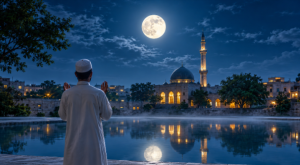
Laylatul Bara’ah is the night of the 15th of Sha’ban, when many Muslims seek forgiveness. Authentic texts confirm Sha’ban’s general virtue, while the hadith about this night carry mixed grades. Scholars largely agree on sincere repentance, Qur’an and dua, and they reject invented rituals.
Reviewed for accuracy against authentic sources.
Every year, as Ramadan draws near, messages about Laylatul Bara’ah flood social media. Some say it decides your destiny for the year. Others call it an innovation and urge you to ignore it. So who is right?
This guide to Laylatul Bara’ah gives you a clear and fair answer. First, you will see what the Qur’an says. Then you will read the hadith, with their grades, and learn where scholars disagree. Finally, you will get practical steps that scholars on every side can accept.
What the Name Actually Means
The word bara’ah is Arabic. It carries the sense of freedom, acquittal, and release from blame. Laylatul Bara’ah therefore translates as the Night of Acquittal.
Persian and Urdu speakers call the same night Shab-e-Barat. Shab means night, and barat comes from bara’ah. Turkish Muslims say Berat Kandili, while Indonesians usually say Nisfu Sya’ban.
Here is a detail many people miss. The hadith texts speak of “the night of mid-Sha’ban” rather than Laylatul Bara’ah. That familiar name spread later through common usage.
Observance of Laylatul Bara’ah also differs by region. In South Asia, families often cook sweets and visit graves. Turkish mosques light up, and many hold special sermons. Saudi Arabia, however, sees no public observance on the night.
Sha’ban: The Month People Overlook
Aisha (RA) said she never saw the Prophet (PBUH) fast a whole month except Ramadan. She also never saw him fast more in any month than in Sha’ban. Sahih al-Bukhari 1969 and Sahih Muslim 1156 record this report.
Usama ibn Zayd (RA) once asked why the Prophet (PBUH) fasted so often in Sha’ban. The Prophet (PBUH) replied that people neglect this month between Rajab and Ramadan. He explained that people’s deeds ascend to the Lord of the Worlds in this month. Therefore, he wanted his own deeds to ascend while he fasted.
Sunan an-Nasa’i 2357 records this narration, and al-Albani (RH) graded it hasan. Honoring Sha’ban as a whole rests on solid ground. The real question is narrower, because it asks whether Laylatul Bara’ah carries its own extra rank.
Is Laylatul Bara’ah Mentioned in the Qur’an?
Some people point to Surah Ad-Dukhan, verses 3 and 4, as proof. In those verses, Allah (SWT) says He sent the Qur’an down on a blessed night. He adds that every matter of wisdom is made distinct on it.
However, most early commentators linked that blessed night to Laylatul Qadr. Surah Al-Qadr, verse 1, says Allah (SWT) sent the Qur’an down on the Night of Decree. Similarly, Surah Al-Baqarah, verse 185, places the Qur’an’s revelation in Ramadan, not Sha’ban.
Ikrimah and a few others said the verses describe mid-Sha’ban. Ibn Kathir (RH) rejected that opinion as far from the evidence. In his view, the Qur’an’s own wording about Ramadan settles the matter.
As a result, no verse names Laylatul Bara’ah. Presenting it as a night the Qur’an clearly describes goes beyond the evidence. Still, the hadith deserve a fair hearing, so the story does not end here.
Think about why this distinction matters. When people mix up the two nights, they borrow the rank of Laylatul Qadr for Sha’ban. Surah Al-Qadr, verse 3, says Laylatul Qadr is better than a thousand months. No verse gives that status to the 15th of Sha’ban.
What the Hadith Say About the 15th of Sha’ban
Several narrations describe Laylatul Bara’ah. Their grades differ, so each one needs a careful look. The table below shows the picture at a glance.
| Narrator | Reference | Main Message | Scholarly Grading |
|---|---|---|---|
| Mu’adh ibn Jabal (RA) | Sahih Ibn Hibban 5665 | Allah forgives creation except polytheists and those who harbor malice | Graded sahih by al-Albani through combined chains |
| Abu Musa al-Ash’ari (RA) | Sunan Ibn Majah 1390 | Same message of forgiveness | Supports the Mu’adh narration |
| Aisha (RA) | Jami at-Tirmidhi 739 | Allah descends and forgives a great multitude | Weak, because the chain has a break |
| Ali (RA) | Sunan Ibn Majah 1388 | Pray at night and fast the next day | Very weak, so scholars reject it |
The Forgiveness Narrations
The reports from Mu’adh ibn Jabal (RA) and Abu Musa al-Ash’ari (RA) share one message. Allah (SWT) looks upon His creation on the night of mid-Sha’ban. He then forgives them, except two groups.
The first group is those who associate partners with Allah (SWT). Then comes the mushahin, the person who harbors hatred toward others. Everyone else stands within reach of forgiveness on that night.
Many people who observe Laylatul Bara’ah rely mainly on these two reports. That is why their grading matters so much.
Al-Albani (RH) concluded that these chains strengthen one another. As a result, he accepted the forgiveness message as authentic. Nevertheless, he stated that no hadith prescribes a special prayer or fast for the night.
The Aisha Narration and Its Weakness
The report of Aisha (RA) is the most famous. One night, she woke and found the Prophet (PBUH) missing. Later she found him at the Baqi cemetery.
There he told her that Allah (SWT) descends to the lowest heaven on the night of mid-Sha’ban. He added that Allah (SWT) forgives more people than the hairs on the sheep of the tribe of Kalb.
Imam at-Tirmidhi recorded this hadith in Jami at-Tirmidhi 739. He also noted that he heard al-Bukhari call it weak, because the chain has a break. Hadith scholars therefore grade it weak on its own.
The Narration About Praying and Fasting
A report attributed to Ali (RA) tells people to pray through the night and fast the following day. It appears in Sunan Ibn Majah 1388. However, critics accused one narrator in its chain of fabrication, so scholars reject it as very weak.
This single report fuels many popular practices, including long fixed prayers. Without a sound chain, those practices lack a firm base. Keep this point in mind whenever someone insists on a special ritual.
How Scholars Differ on This Night
Classical scholars split into two camps over Laylatul Bara’ah. Ibn Rajab al-Hanbali (RH) recorded that several Syrian tabi’in honored the night with worship. Khalid ibn Ma’dan and Luqman ibn Amir were among them. Meanwhile, many scholars in the Hijaz rejected special gatherings as an innovation.
Ibn Taymiyyah (RH) took a middle path. Still, he said praying alone on this night is fine, as some early Muslims did. However, he rejected fixed prayers with set numbers and public celebrations.
Modern scholars also disagree. Al-Albani (RH) affirmed the forgiveness hadith. Ibn Baz (RH), however, held that no authentic evidence singles out this night. He therefore discouraged special observance.
So where does that leave you? Both camps reject the 100-rakat prayer and every fixed ritual. They differ only on how much extra significance the night carries.
So respect that difference. A Muslim who prays quietly at home and one who sleeps normally both hold valid scholarly positions. Neither deserves ridicule, and neither should pressure the other.
Scholars who caution against singling out the night also cite a general principle. The Prophet (PBUH) forbade singling out the night of Friday for prayer above other nights, as Sahih Muslim 1144 records. They apply the same logic to mid-Sha’ban, since no sound text assigns it a fixed act.
What You Can Safely Do on the 15th of Sha’ban
Every act below keeps your Laylatul Bara’ah worship safe, because each has strong support on any night of the year. None depends on a weak narration. Therefore, you can follow them whichever scholarly opinion you prefer.
- Repent sincerely. Allah (SWT) loves those who turn back to Him, as Surah Al-Baqarah, verse 222, confirms. Name your sins honestly, and promise yourself to stop.
- Pray voluntary prayers at home. Choose as many rak’ahs as you normally would at night. Do not set a number or a formula, because no authentic text sets one.
- Recite the Qur’an. Even ten minutes of focused recitation with understanding beats an hour of distracted rushing.
- Make dua. Ask for forgiveness, guidance, and a strong start to Ramadan, in your own words.
- Mend broken ties. Call the relative you stopped speaking to, and let go of what you can.
A Simple 45-Minute Evening Plan
This plan is a practical suggestion, not a prescribed ritual. Start with 10 minutes of istighfar after Maghrib or Isha. Then recite 15 minutes of Qur’an, and pray your usual voluntary rak’ahs.
Next, spend 10 minutes in personal dua. Finish with a five-minute message to someone you need to forgive or apologize to. As a result, the night leaves you lighter instead of just more tired.
Sayyidul Istighfar: The Master Dua for Forgiveness
The Prophet (PBUH) called this supplication the master of seeking forgiveness. It fits Laylatul Bara’ah perfectly, although you can recite it on any day.
اللَّهُمَّ أَنْتَ رَبِّي لَا إِلَهَ إِلَّا أَنْتَ، خَلَقْتَنِي وَأَنَا عَبْدُكَ، وَأَنَا عَلَى عَهْدِكَ وَوَعْدِكَ مَا اسْتَطَعْتُ، أَعُوذُ بِكَ مِنْ شَرِّ مَا صَنَعْتُ، أَبُوءُ لَكَ بِنِعْمَتِكَ عَلَيَّ، وَأَبُوءُ بِذَنْبِي فَاغْفِرْ لِي، فَإِنَّهُ لَا يَغْفِرُ الذُّنُوبَ إِلَّا أَنْتَ
Allahumma anta rabbi la ilaha illa anta, khalaqtani wa ana abduka. Wa ana ala ahdika wa wa’dika mastata’t, a’udhu bika min sharri ma sana’t. Abu’u laka bi ni’matika alayya, wa abu’u bi dhanbi faghfir li. Fa innahu la yaghfirudh-dhunuba illa anta.
“O Allah, You are my Lord. None has the right to be worshipped but You. You created me, and I am Your servant. As best I can, I keep Your covenant and promise.
From the evil I have done, I seek refuge in You. Your favor upon me I acknowledge, and I acknowledge my sin, so forgive me. Truly, none forgives sins except You.”
Exact context of recitation: Recite it once in the morning and once in the evening. Sahih al-Bukhari 6306 records the virtue of saying it with firm faith.
Why Holding a Grudge Blocks Forgiveness
Both forgiveness narrations exclude the mushahin. Scholars describe this person as someone consumed by hatred toward fellow Muslims. In other words, a grudge can stand between you and the mercy you are asking for.
The Prophet (PBUH) said a Muslim may not cut off his brother for more than three nights. Sahih al-Bukhari 6077 records this teaching. Therefore, mending a relationship is not a side activity on this night. It sits at the center.
First, start with the person who comes to mind. Send a short, sincere message, and skip the long explanations. If a full reconciliation feels impossible, at least clear your own heart of resentment.
A Dua to Clear Resentment
رَبَّنَا اغْفِرْ لَنَا وَلِإِخْوَانِنَا الَّذِينَ سَبَقُونَا بِالْإِيمَانِ وَلَا تَجْعَلْ فِي قُلُوبِنَا غِلًّا لِلَّذِينَ آمَنُوا رَبَّنَا إِنَّكَ رَءُوفٌ رَحِيمٌ
Rabbana-ghfir lana wa li-ikhwaninal-ladhina sabaquna bil-iman, wa la taj’al fi qulubina ghillan lil-ladhina amanu, rabbana innaka ra’ufur-rahim.
“Our Lord, forgive us and our brothers who preceded us in faith. Place no resentment in our hearts toward those who believe. Our Lord, You are Kind and Merciful.”
Exact context of recitation: This verse comes from Surah Al-Hashr, verse 10. Recite it after prayer, or whenever resentment rises in your heart.
Common Myths to Avoid on Shab-e-Barat
Because Laylatul Bara’ah carries so much emotion, myths spread quickly. Check any claim you receive before you forward it. These are the most common ones.
- The 100-rakat prayer. No authentic text prescribes it, and hadith scholars classify the reports behind it as fabricated.
- “Your fate for the year is written tonight.” Scholars apply Surah Ad-Dukhan, verse 4, to Laylatul Qadr, not to mid-Sha’ban.
- “The souls of the dead return home tonight.” No sound evidence supports this idea.
- Fireworks, loud gatherings, and lavish spending. Surah Al-Isra, verses 26 and 27, warns against wasteful spending, so keep the night peaceful.
- Treating the night as obligatory. Nothing in the Qur’an or authentic Sunnah makes any act on this night compulsory.
None of these myths helps make the night meaningful. Honest repentance already does that work. Sincerity matters more than rituals, so keep your focus there.
Why This Night Moves Hearts Around the World
Many families treat Laylatul Bara’ah as a quiet reset button. Parents wake their children to pray together. Neighbors call each other to ask for forgiveness. Even people who rarely pray often feel the pull of this night.
That emotional power is real, and it deserves respect. However, emotion works best when evidence guides it. When your worship follows authentic texts, the peace you feel rests on something solid.
Therefore, think of the night as an invitation rather than a command. Allah (SWT) welcomes the sincere servant on every night of the year. Laylatul Bara’ah simply reminds you of that open door before Ramadan arrives.
Frequently Asked Questions
Is Shab-e-Barat the same as Laylatul Qadr?
No, they are different nights. Laylatul Qadr falls in the last ten nights of Ramadan, and Surah Al-Qadr names it. Shab-e-Barat falls in Sha’ban and has no chapter or verse naming it.
Is praying on this night an innovation?
Voluntary prayer is not an innovation in itself. The problem starts when people invent a fixed number or formula, or call it required. Scholars differ on whether to single out this night at all.
Should I fast on the 15th of Sha’ban?
No authentic hadith singles out this day for fasting. However, the 15th falls among the white days, the 13th, 14th, and 15th. The Prophet (PBUH) urged fasting them, as Jami at-Tirmidhi 761 records.
When does the night begin?
The Islamic day starts at sunset, so the night begins at Maghrib on the evening of the 14th. Dates still vary by moon sighting and country. Therefore, follow your local announcement.
How can this night help me prepare for Ramadan?
Use it as a reset point. Repent, clear your grudges, and pick one small habit to build before Ramadan. A realistic habit you keep beats an ambitious plan you drop.
A Balanced Takeaway
Laylatul Bara’ah sits in a space where scholars respectfully disagree. Sha’ban itself has authentic virtue, and the forgiveness narrations carry real weight for many scholars. At the same time, no sound text prescribes a special prayer, fast, or celebration.
So walk the safe path. Repent honestly, recite the Qur’an, make dua, and mend your relationships. Then enter Ramadan with a clean heart and a clear plan.
Share this guide with a family member who keeps asking about this night. Then make one sincere dua for the whole Ummah, including the person who sent it to you.
Author Description/Bio:
The Explore Islamic World editorial team writes every article from the Qur’an and authentic hadith, with references checked against Sahih al-Bukhari, Sahih Muslim, and Sunnah.com. Each piece is reviewed for accuracy before publication and reflects mainstream scholarly positions. Where scholars differ, we present each view fairly.

Comments are closed.
[…] Ibn Majah 1390 records a report about the middle of Shaban. It says Allah (SWT) looks at His creation on that night. He forgives them all, except a polytheist […]