





Sujud Sahw Rules: How to Fix Mistakes in Prayer Step by Step
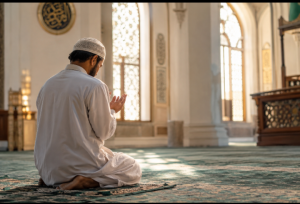
Sujud Sahw rules prescribe two extra prostrations to fix unintentional mistakes in prayer. You perform them before or after the final Salam, depending on the mistake and your school. Do not restart the prayer for minor errors. Just correct it calmly, and complete Salah as usual.
Reviewed for accuracy against authentic sources.
Forgetfulness is a natural part of being human. Therefore, Islam gives a gentle fix for mistakes in Salah, instead of demanding a repeated prayer. Learning the Sujud Sahw rules removes doubt and restores your confidence in daily worship.
Even the Prophet Muhammad (PBUH) forgot parts of his prayer on a few occasions. Each time, he showed his companions how to correct the mistake. This guide explains the Sujud Sahw rules by following that practical example.
Sujud Sahw Rules at a Glance
Scan this table first. Then read the details of each case below.
| Situation | Timing in the Reports | Source |
|---|---|---|
| Extra rak’ah added | After Salam | Sahih al-Bukhari: 401 |
| First Tashahhud forgotten | Before Salam | Sahih al-Bukhari: 829 |
| Doubt, with a sure baseline | Before Salam | Sahih Muslim: 571 |
| Doubt, with strong likelihood | After Salam | Sahih al-Bukhari: 401 |
| Salam given too early | After Salam | Sahih al-Bukhari: 482 |
The four schools of thought differ on the exact timing of the Sujud Sahw rules, as explained below. Therefore, follow the practice of your own school.
What Is Sujud Sahw?
Sujud Sahw means two extra prostrations that fix a forgotten or mistaken action in prayer. The Arabic word “Sahw” means forgetfulness, or an unintentional slip.
- Purpose: These prostrations fix minor errors in both obligatory (Fard) and voluntary (Nafl) prayers.
- No restart: You do not have to repeat your Salah from the beginning.
- Prophetic origin: The Prophet (PBUH) prostrated after he prayed an extra rak’ah (Sahih al-Bukhari: 401; Sahih Muslim: 572).
This correction also humbles the worshipper before Allah (SWT). In addition, it defeats Shaytan’s attempt to create doubt during prayer.
In each prostration, most people recite the usual words of glorification. Say them calmly, as you do in any Sujud.
سُبْحَانَ رَبِّيَ الْأَعْلَى
Subhana Rabbiyal-A’la.
“Glory be to my Lord, the Most High.”
Recite it three times in each prostration of Sujud Sahw, just as in a normal Sujud.
Three Types of Prayer Mistakes
Scholars group prayer mistakes into three categories. Each one calls for a slightly different response.
Addition (Al-Ziyadah)
This happens when you add a movement or a unit by mistake. For example, you may bow twice in one rak’ah. You may also stand for a fifth rak’ah in a four-rak’ah prayer like Zuhr or Asr.
If you realize this while standing, sit down at once. Then complete the prayer, and follow the correction described below.
Omission (Al-Naqs)
This happens when you skip an act. Forgetting the first Tashahhud is the most common example. The Prophet (PBUH) once stood up after two rak’ahs without sitting. Before the final Salam, he performed two prostrations (Sahih al-Bukhari: 829; Sahih Muslim: 570).
Doubt (Al-Shakk)
This happens when you are unsure how many rak’ahs you have prayed. Build on the number you are certain of, and then apply the correction. We explain the details in the doubt section below.
Pillars, Obligatory Acts, and Sunnah Acts
Not every mistake is treated the same way. Under the Sujud Sahw rules, Salah has three levels of actions.
- Pillars (Arkan): These include Takbir al-Tahrimah, standing, Ruku, Sujud, and the final Tashahhud. If you skip a pillar, you must perform it. Sujud Sahw alone cannot replace it.
- Obligatory acts (Wajibat): The first Tashahhud and the transitional Takbirs belong here in the Hanafi and Hanbali schools. Sujud Sahw is meant to repair these acts.
- Sunnah acts: Examples include the opening supplication and a surah after Al-Fatiha. Most scholars say forgetting them does not require Sujud Sahw.
The Shafi’i and Maliki schools classify the first Tashahhud as a confirmed Sunnah. Even so, they also prescribe Sujud Sahw when it is forgotten.
Before or After Salam? How the Schools Differ
The Hadith reports show both timings. Therefore, scholars reached different Sujud Sahw rules on when to prostrate.
- Hanafi: Give one Salam to the right, then perform both prostrations. After that, sit, recite Tashahhud, and give Salam.
- Shafi’i: Perform the prostrations before the final Salam in every case.
- Maliki: Prostrate before Salam for omissions, and after Salam for additions.
- Hanbali: Follow the reports case by case, as shown in the table above.
All of these views rest on authentic reports, and each is valid within its school. So, choose the method of your school, or ask your local imam.
Step-by-Step: Prostrating Before Salam
Use these Sujud Sahw rules when you omitted an act, or when you built on the lower number in doubt.
- Finish the final Tashahhud, Durood Ibrahim, and your personal supplications as usual.
- Stay seated, and say “Allahu Akbar” without raising your hands.
- Go into prostration, and recite “Subhana Rabbiyal-A’la” three times.
- Sit up briefly while saying “Allahu Akbar.”
- Say “Allahu Akbar” again, and perform the second prostration the same way.
- Sit up, and complete the prayer with Salam to the right and left.
Step-by-Step: Prostrating After Salam
Use these Sujud Sahw rules when you added an extra rak’ah, or gave Salam too early. Hanafi followers use them in every case.
- Finish your prayer, and give Salam.
- Say “Allahu Akbar” while you stay seated.
- Go into prostration, and recite “Subhana Rabbiyal-A’la” three times.
- Sit up calmly while saying “Allahu Akbar.”
- Perform the second prostration the same way.
- Sit, and give Salam once more to both sides (Sahih Muslim: 572).
Many scholars also recite a short Tashahhud before this final Salam. Follow the practice of your school on this detail.
Handling Doubt About Your Rak’ah Count
When You Have No Strong Feeling
Suppose you cannot tell whether you prayed two or three rak’ahs. The Prophet (PBUH) taught us to throw away the doubt and build on what we are sure of. After that, we prostrate twice before the Salam (Sahih Muslim: 571).
In this case, assume the lower number. Complete the remaining rak’ahs, and then perform the correction.
When You Lean Toward One Number
If you strongly lean toward one number, follow that conviction. Complete the prayer, and give Salam. Then perform the two prostrations, followed by a second Salam (Sahih al-Bukhari: 401).
When Doubt Becomes Constant
Some people doubt their prayer all the time. This is called waswas. Ignore it, and assume your prayer is correct. Reacting to waswas only deepens the distraction.
Stories From the Sunnah
Three famous reports help us understand the rules in real life.
- The extra rak’ah: The Prophet (PBUH) prayed five rak’ahs in Zuhr. The companions told him, and he performed two prostrations after Salam (Sahih al-Bukhari: 401).
- The early Salam: He once gave Salam after two rak’ahs. A companion, Dhul Yadayn, reminded him. The Prophet (PBUH) completed the prayer, gave Salam, and then prostrated (Sahih al-Bukhari: 482; Sahih Muslim: 573).
- The first Tashahhud: Abdullah ibn Buhaynah (RA) reported that the Prophet (PBUH) stood after two rak’ahs without sitting. He prostrated twice before Salam, and the people prostrated with him (Sahih al-Bukhari: 829).
These stories show how patient the Prophet (PBUH) was. They also form the base of the Sujud Sahw rules. He never scolded anyone for reminding him, and he used each mistake to teach.
Everyday Examples
- Forgetting the first Tashahhud in Zuhr: If you catch it before you stand fully, sit back down. If you have already stood up straight, continue, and prostrate before the final Salam (Sunan Abi Dawud: 1036).
- Praying five rak’ahs in Asr: Sit down the moment you realize it. Finish the Tashahhud and Salam, and follow the correction of your school.
- Reciting the wrong surah: This usually needs no correction, because Sunnah acts do not require Sujud Sahw.
- Losing count in a Nafl prayer: Build on the lower number, and prostrate before Salam.
Mistakes Behind the Imam
In congregation, the followers copy the imam. If the imam performs Sujud Sahw, you perform it with him. Even if you joined late, follow him in these prostrations.
If you make a mistake while following the imam correctly, the imam’s prayer covers it. Therefore, no individual correction is needed. However, if you stand to finish a missed rak’ah, you correct only your own mistakes.
Common Mistakes When Applying These Rules
- Mixing the timing: Many people follow one school for one mistake and another school for the next. Instead, follow one school consistently.
- Skipping a pillar: Sujud Sahw cannot replace a missed pillar like Ruku or Sujud.
- Over-correcting: Do not prostrate for small Sunnah slips.
- Ignoring the imam: Follow the imam, even when you remember a different practice.
Tips to Reduce Mistakes in Prayer
- Learn the meaning of what you recite, including verses like Ayatul Kursi, to stay mentally present.
- Pause briefly before the opening Takbir to clear your mind.
- Keep your gaze on the spot of prostration.
- Move calmly between postures instead of rushing.
Small, steady habits also strengthen focus over time. Our guide to daily Sunnahs offers simple ideas to start with.
Frequently Asked Questions (FAQ)
What If I Forget an Entire Pillar, Like Ruku?
Answer: You must perform the missing pillar itself. Most scholars say a rak’ah with a skipped pillar does not count. So, if you realize it in a later rak’ah, that earlier rak’ah is void. The current one takes its place, and you complete the prayer, then apply the correction.
What If I Have Constant Doubts About My Rak’ah Count?
Answer: Ignore obsessive doubt (waswas), and assume your prayer is correct. Reacting to it only increases the problem.
Does Sujud Sahw Apply to Voluntary Prayers?
Answer: Yes. A mistake inside a Nafl prayer also calls for Sujud Sahw. However, a prayer you missed entirely is a different matter, and it needs make-up, not Sujud Sahw.
What If I Forget to Perform It and Remember Later?
Answer: If you remember soon after Salam, perform it at once. If much time has passed, scholars differ on what to do. Many say the prayer stays valid. Ask a trusted scholar about your case.
What If the Imam Makes the Mistake?
Answer: Follow the imam in his prostrations. Even if you did not notice his mistake, prostrate with him.
Should I Say Anything Special in the Prostrations?
Answer: Recite the usual words of Sujud. No special text is required.
Can I Do Sujud Sahw If I Am Unsure It Is Needed?
Answer: Yes. Doing it out of caution does no harm, but avoid turning it into a habit driven by waswas.
How Many Times Do I Say Takbir?
Answer: Say “Allahu Akbar” when going into each prostration, and when rising from it. You do not raise your hands.
Final Thoughts
Sujud Sahw rules show the mercy built into Islamic worship. Allah (SWT) does not ask for perfection. He asks for sincerity and effort.
Learn the Sujud Sahw rules of your school, practice them calmly, and ask a qualified imam when in doubt. If this guide helped you, you may also read our guides on the rules of Ghusl and Salatul Tasbih. And Allah knows best.
References
- Sahih al-Bukhari: 401, 482, and 829
- Sahih Muslim: 570, 571, 572, and 573
- Sunan Abi Dawud: 1036
Author Bio
Explore Islamic World Editorial Team
The Explore Islamic World editorial team writes each guide from the Qur’an, Sahih al-Bukhari, Sahih Muslim, and the Sunan collections. We check every Hadith number against Sunnah.com before publishing. Where scholars differ, we present each view fairly.

Comments are closed.
[…] explaining the dream meaning of praying Namaz and reading the Quran, Islamic scholars carefully examine every posture and type of prayer. The […]