Can Muslims Celebrate Birthdays? Both Sides of the Ruling
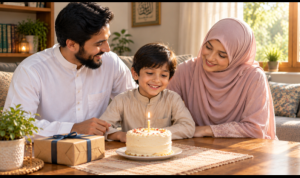
Can Muslims celebrate birthdays? Scholars differ on the ruling. Many fatwa bodies call birthday celebrations an innovation (bid’ah), because the Prophet (PBUH) never held them. Other scholars permit birthdays as harmless social customs, but both groups forbid wastefulness and haram acts.
Reviewed for accuracy against authentic sources.
Birthdays are a familiar social ritual. Families gather, friends exchange gifts, and someone cuts a cake. For a practicing Muslim, however, a fair question follows. So, can Muslims celebrate birthdays, or does the practice conflict with the faith?
This guide answers from the Qur’an, authentic Hadith, and the positions of respected scholars. First, you will see the evidence on both sides. You will also get practical advice for everyday situations.
Can Muslims Celebrate Birthdays? The Short Answer
No verse of the Qur’an and no authentic Hadith addresses birthday celebrations directly. As a result, scholars hold different opinions. Some view birthdays as a permissible social custom, while others consider them an innovation.
Can Muslims celebrate birthdays with a clear conscience? Some scholars say yes, provided no sin is involved. However, others advise against it altogether.
Neither side permits sin. In fact, both reject extravagance, immodesty, and any act that contradicts Islamic teachings. Follow the view of a scholar you trust, and avoid condemning those who follow the other opinion.
The History Behind Birthday Celebrations
Birthday celebrations existed in many cultures long before Islam. Over time, they became a common family tradition worldwide. Because of this, most people today see them as social occasions rather than religious events.
Islam did not prescribe birthdays as worship or as a festival. It does, however, prescribe a celebration at birth, which is the Aqiqah. The Prophet (PBUH) tied every child to an Aqiqah on the seventh day (Sunan Abi Dawud: 2838).
How Islamic Law Judges Customs and Worship
Scholars separate acts of worship from everyday customs. First, worship needs clear evidence from the Qur’an or the Sunnah. Then, customs are generally permitted unless a text forbids them.
The Prophet (PBUH) warned that any new act added to the religion without a basis is rejected (Sahih al-Bukhari: 2697). Therefore, can Muslims celebrate birthdays? That depends on whether a birthday counts as worship or as a custom.
This one question therefore explains most of the disagreement among scholars.
Arguments of Scholars Who Call Birthdays an Innovation
Can Muslims celebrate birthdays without innovating? Scholars who say no rely on four main points.
No Evidence from the Prophet and His Companions
First, no authentic report shows that the Prophet Muhammad (PBUH) celebrated birthdays. The same is true for his Companions (RA) and the early generations. They loved the Prophet deeply, yet they never marked his birth with a yearly event.
Therefore, many scholars do not treat birthdays as a Sunnah-based practice.
Islam Already Has Two Festivals
The Prophet (PBUH) arrived in Madinah and found two days of celebration. Then he told the people that Allah had replaced them with something better. Those two days are Eid al-Fitr and Eid al-Adha (Sunan Abi Dawud: 1134).
Therefore, many scholars advise against adding new yearly celebrations that carry a religious tone.
Imitating Other Cultures
Some scholars also cite the Hadith, “Whoever imitates a people is one of them” (Sunan Abi Dawud: 4031). They argue that rituals like candles and wishes copy other religious traditions.
However, scholars who permit birthdays reply that the cake today is a social habit, not a religious act.
Extravagance and Prohibited Activities
Also, modern parties often involve wasteful spending, immodest dress, or inappropriate entertainment. Allah (SWT) says, “Indeed, the wasteful are brothers of the devils” (Qur’an 17:27).
Therefore, many scholars discourage such parties. The Permanent Committee for Islamic Research and Fatwa in Saudi Arabia regards birthday celebrations as an innovation.
Arguments of Scholars Who Permit Birthdays
Can Muslims celebrate birthdays if the event is a simple family dinner? Scholars who permit birthdays say yes, because their reasoning rests on three points.
Customs Are Permitted by Default
These scholars first note that a birthday party is not a ritual. Instead, people hold it for joy and family bonding, not to earn reward from Allah. Without a text forbidding it, the default ruling for customs stays permissible.
Gratitude for the Gift of Life
Allah (SWT) promises, “If you are grateful, I will surely increase you” (Qur’an 14:7). Therefore, scholars in this camp say that thanking Allah for another year fits this verse.
They also cite the Prophet (PBUH), who fasted on Mondays. He explained that it was the day he was born (Sahih Muslim: 1162).
Intention and Content Decide the Ruling
Even scholars who permit birthdays attach conditions. The gathering must avoid haram entertainment, immodesty, and wastefulness. Additionally, nobody should believe that the date carries special spiritual power.
What a Muslim Can Do on Their Birthday
Can Muslims celebrate birthdays in a way that pleases Allah? Several actions stay safe under both views. As a result, each one turns the day into a reminder of gratitude.
Give Charity
Helping those in need is one of the most rewarding acts in Islam. Also, giving charity is a meaningful way to thank Allah for your life. Even a small donation counts.
Recite the Qur’an
Strengthening your bond with the Qur’an is always beneficial. Therefore, spend time reciting and reflecting on a few pages. This can bring spiritual peace and blessings.
Reflect on Your Life
A birthday reminds you that time is passing. Review your deeds, set goals for self-improvement, and prepare for the Hereafter. Thus, these exercises make the day valuable.
Make a Dua of Gratitude
Allah (SWT) teaches a dua for thanking Him for His favors on you and your parents (Qur’an 46:15).
- Arabic: رَبِّ أَوْزِعْنِي أَنْ أَشْكُرَ نِعْمَتَكَ الَّتِي أَنْعَمْتَ عَلَيَّ وَعَلَىٰ وَالِدَيَّ وَأَنْ أَعْمَلَ صَالِحًا تَرْضَاهُ وَأَصْلِحْ لِي فِي ذُرِّيَّتِي ۖ إِنِّي تُبْتُ إِلَيْكَ وَإِنِّي مِنَ الْمُسْلِمِينَ
- Transliteration: Rabbi awzi’ni an ashkura ni’mataka allati an’amta ‘alayya wa ‘ala walidayya. Wa an a’mala salihan tardahu. Wa aslih li fi dhurriyyati. Inni tubtu ilayka wa inni minal-muslimin.
- Meaning: “My Lord, enable me to be grateful for Your favor upon me and my parents. Enable me to do righteous deeds that please You. Make my offspring righteous. Indeed, I repent to You, and I am among the Muslims.”
- When to recite: Say it whenever you thank Allah for your age, your health, and your family.
Is Cutting a Birthday Cake Permissible?
No verse or authentic Hadith addresses birthday cakes. Cake is simply food, so scholars judge the matter by intention and by the activities around it. If nothing prohibited is involved, some scholars view it as a cultural practice rather than a religious act.
Candles, however, raise a separate concern. Blowing them out and making a wish come from non-Islamic traditions, so some scholars advise skipping them. A simple cake without those rituals avoids the disagreement.
Birthday Wishes, Gifts, and Parties at a Glance
The Prophet (PBUH) said, “Exchange gifts, and you will love one another” (Al-Adab al-Mufrad: 594). Gifts and kind words are welcome. However, the debate centers on tying them to a birthday as a yearly occasion.
| Activity | Scholars Who Permit | Scholars Who Discourage |
|---|---|---|
| Kind words and dua for someone | Allowed on any day | Good any day, but not tied to the birthday |
| Giving a gift | Allowed as a social custom | Good any day, but not as a birthday tradition |
| Simple family dinner | Allowed if nothing haram occurs | Discouraged as a yearly celebration |
| Candles and wishes | Advised to skip | Discouraged as imitation |
| Charity and Qur’an recitation | Encouraged | Encouraged on every day |
| Lavish party with haram elements | Not allowed | Not allowed |
Birthdays and Children
Parents often feel pressure when their children receive birthday invitations at school. Can Muslims celebrate birthdays for their children without harming their faith? Parents should weigh both views and ask a scholar they trust.
If you choose not to hold birthday parties, give your children a positive alternative. Also, explain your reasons kindly, and set aside a family day for dua, charity, and a simple meal. Children accept a rule more easily when it comes with warmth.
Attending a Friend’s or Colleague’s Birthday
Can Muslims celebrate birthdays with non-Muslim friends or colleagues? Scholars again differ, but those who permit it say you can join a modest gathering as a courtesy.
The other group suggests declining politely. You can still send a kind message or a small gift. Whichever view you follow, avoid haram food, drink, and entertainment.
Common Misconceptions About Birthdays in Islam
Several myths surround this topic, and they cause needless arguments. Clearing them up keeps the discussion fair.
- Myth: Scholars call birthday celebrations disbelief. In reality, even scholars who discourage birthdays classify them as an innovation, not disbelief.
- Myth: Islam bans all joy and celebration. However, Islam welcomes joy at Eid, at weddings, and at the birth of a child.
- Myth: Only one opinion is valid. Instead, both views come from qualified scholars, so follow the one you trust with sincerity.
- Myth: Gratitude needs a party. Thanking Allah needs only a sincere heart, so you can do it quietly.
A Simple Plan to Mark Your Birthday With Gratitude
Want a routine that works under both opinions? Try this plan, and adjust it to your own life.
- Morning: Pray Fajr on time, and then recite the dua above.
- Parents: Call or visit them, and thank them. Allah (SWT) commands kindness to parents (Qur’an 17:23).
- Charity: Give sadaqah, even a small amount, or feed a neighbor.
- Fasting: If your birthday falls on a Monday, fast and follow the Sunnah (Sahih Muslim: 1162).
- Reflection: Write three goals for the coming year, such as memorizing a surah.
- Family: Share a simple meal without extravagance.
Why Respecting Scholarly Difference Matters
Families often argue over this topic, and the arguments can hurt relationships. However, the Prophet (PBUH) compared the believers to one body. When one part aches, the whole body feels it (Sahih al-Bukhari: 6011).
Therefore, explain your view with kindness, and avoid mocking those who differ. Humble questions keep the family close and the discussion productive.
Remember that you answer for your own intention. Seek knowledge, act on the view you trust, and leave the rest to Allah (SWT).
Frequently Asked Questions (FAQ)
Is Celebrating Birthdays Halal?
Answer: Scholars differ on this issue. Some consider it permissible as a social custom, while others classify it as an innovation.
Is Celebrating Birthdays Haram?
Answer: Scholars do not automatically call a birthday celebration haram. However, any prohibited or wasteful activities attached to it are impermissible.
Can Muslims Exchange Gifts on Birthdays?
Answer: Yes, gift-giving is encouraged in Islam and strengthens relationships. Scholars who discourage birthdays simply prefer that you give gifts on other days.
Can Muslims Make Dua on Their Birthday?
Answer: Absolutely. Making dua for yourself, your family, and the Muslim community is a commendable act at any time.
Can Muslims Give Charity on Their Birthday?
Answer: Yes. Charity is highly encouraged in Islam, and it can be a meaningful way to thank Allah for His blessings.
Is Saying “Happy Birthday” Allowed?
Answer: Scholars differ here as well. Those who permit birthdays allow a kind greeting. Others advise replacing it with a general dua for the person.
Is Celebrating the Prophet’s Birthday the Same Question?
Answer: No. That is a separate discussion with its own evidence, and scholars differ on it as well. Ask a qualified scholar for guidance.
Is Celebrating a Birthday Shirk?
Answer: No. Even scholars who discourage birthdays call it an innovation at most. However, believing that a birthday controls luck or destiny would contradict Islamic belief.
Should I Criticize Friends Who Celebrate Birthdays?
Answer: No. Scholars differ, so advise gently and only when you see a clear sin.
Guidance for Parents Raising Children
Children love birthdays, and parents often feel torn. They want to protect their faith, yet they do not want their child to feel left out. Fortunately, there is a balanced path.
First, teach your child the reason behind your family’s choice. Children accept a rule more easily when they understand it. In addition, offer joyful alternatives, such as a family outing, a special meal, or a story about the Prophets (AS).
Also, avoid shaming classmates who celebrate. Instead, teach your child to respect others and to speak kindly. Likewise, keep the home warm and cheerful, so the child never links Islam with sadness.
Finally, use the day to build good habits. For example, let the child choose a charity to support with pocket money. As a result, the child learns gratitude, generosity, and love for Allah (SWT) in a natural way.
Final Thoughts
So, can Muslims celebrate birthdays? Scholars have discussed this question for many years, and no unanimous opinion exists. What all scholars agree on is that every day of a Muslim’s life should seek the pleasure of Allah.
Can Muslims celebrate birthdays and still follow the Sunnah? Yes, if the day brings gratitude, good deeds, charity, and no prohibited acts. Seek guidance from qualified scholars, and decide based on the Qur’an and the Sunnah.
Share this guide with a family member who asks the same question. And Allah knows best.
References
- The Holy Qur’an: 14:7, 17:27, and 46:15
- Sahih al-Bukhari: 2697
- Sahih Muslim: 1162
- Sunan Abi Dawud: 1134, 2838, and 4031
- Al-Adab al-Mufrad: 594
Author Bio
Explore Islamic World Editorial Team
The Explore Islamic World editorial team writes each guide from the Qur’an, Sahih al-Bukhari, Sahih Muslim, and the Sunan collections. We check every Hadith number against Sunnah.com before publishing. Where scholars differ, we present each view fairly.